Walnuts

Raw Walnuts

California raw walnut kernels for industrial food manufacturing, foodservice supply, repacking and export programs. Built for buyers who need flexible input material for roasting, seasoning, grinding, chopping, blending or direct ingredient use.

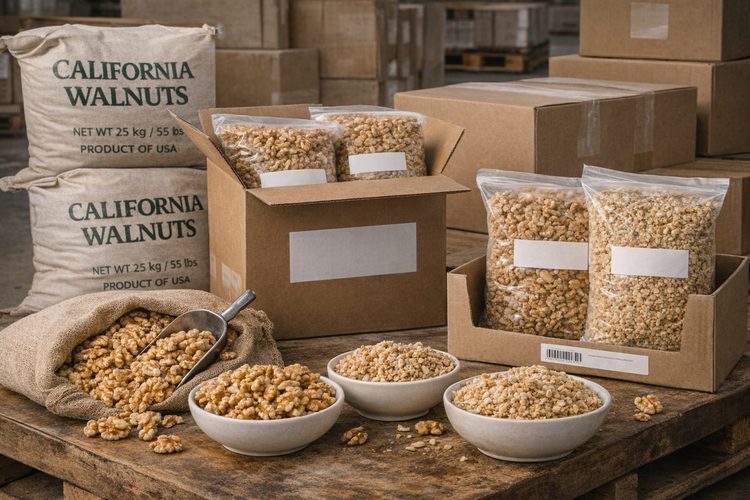
Illustrated placeholder for Raw Walnuts
Product overview

Raw walnuts from a California commercial workflow

Raw walnuts are typically sourced when the buyer wants the greatest possible flexibility after receipt. Instead of locking the product into a roasted or seasoned state, the buyer can direct the next step internally or through a co-manufacturing partner. This makes raw kernels a common input for bakery production, confectionery processing, cereal and granola systems, snack manufacturing, nut butter projects, sauces, fillings, frozen dessert inclusions, topping blends and ingredient repack programs.

From a buying perspective, raw walnut supply is usually discussed around end-use fit rather than around a single universal specification. A bakery customer may focus on visual appearance, break profile and bite integrity. A grinder may care more about flavor cleanliness, moisture, oil release behavior and consistency through the process line. A repacker may prioritize appearance, color selection, coding, bag dimensions and carton presentation. Export buyers often combine quality parameters with documentation, shelf-life planning and shipping format.

Atlas Global Trading Co. positions raw walnuts as a flexible commercial category that can support spot business, repeat production schedules and longer-volume planning where the application brief is clear. The most efficient inquiries are the ones that define not only the product but also the downstream process, required packaging, destination market, timing and expected order rhythm.

Technical

Technical buying focus

Raw walnut programs are commonly evaluated by kernel style, appearance, size distribution, color expectations, moisture profile, break percentage, defect tolerance, packaging configuration and the buyer’s planned process route. Technical fit depends on whether the walnuts will be used whole, chopped, roasted, seasoned, milled, buttered, pasted or blended into other ingredient systems.

Buyers with formal specifications often provide target ranges or acceptability language for moisture, defect allowances, flavor condition, cleanliness and packaging integrity. Buyers without a finished spec can still move faster by sharing the application and any known constraints so the commercial conversation starts from process reality, not just product name.

Commercial

Commercial planning focus

Raw walnuts are frequently used as a base category for industrial formulations, private label repacking, foodservice packs and export business because they offer broad flexibility. Commercial planning usually centers on order size, frequency, destination, pack style, lead-time tolerance, documentation needs and whether the buyer is building a spot program or a repeat supply lane.

The earlier a buyer defines shipment cadence, annualized volume, target incoterm direction, warehouse or port destination and labeling requirements, the more efficiently the inquiry can be reviewed. Good commercial preparation reduces the risk of mismatched quotations and shortens the path from inquiry to executable order.

Product forms

Kernel styles and application-driven format planning

Raw walnut buying is rarely one-dimensional. The correct format depends on the process line, finished product appearance, target cost structure and packaging strategy.

Whole-style material

Halves and visually stronger kernels

Often discussed for bakery decoration, premium inclusions, topping programs and retail-facing repack concepts where kernel appearance matters. Buyers usually care about color balance, kernel integrity and break profile during transit and handling.

Ingredient style

Pieces for blends and processing

Common for cereals, snack mixes, bars, fillings, cookie dough systems, industrial bakery use and applications where a defined piece presence is needed but perfect half presentation is not essential. Commercial discussions often focus on size consistency and line performance.

Further process input

Grinding, meal and butter feedstock

Processors making walnut meal, flour, paste, butter or blended ingredient systems may place greater weight on flavor, moisture, cleanliness, oil behavior and production consistency than on appearance. In these cases, format planning is tied directly to downstream yield and line efficiency.

Technical detail

Specification framework buyers often review

Final specifications depend on application, destination market and commercial approval. The list below reflects the areas that are usually reviewed in a raw walnut buying brief.

Core product parameters

  • kernel style: halves, pieces or application-specific selection
  • target size profile or break distribution
  • color expectation or appearance preference
  • moisture target or acceptable operating range
  • clean flavor profile and absence of off-notes
  • defect tolerances appropriate to the application
  • foreign material controls and inspection approach
  • lot coding and traceability expectations

Process and quality parameters

  • intended use: direct inclusion, roasting, grinding or repacking
  • microbiological expectations based on product route
  • sieve or piece-size screening needs where relevant
  • packaging barrier needs for freshness protection
  • shelf-life objective by market and storage conditions
  • document set required by the buyer or importer
  • destination-market labeling or language needs
  • sampling, approval and retained reference process
Commercial notes

How raw walnut business is usually structured

A better inquiry is not always a longer inquiry. It is a more complete one. Buyers who provide a concise but structured commercial brief can move faster from first contact to workable quotation.

Volume planning

Spot, scheduled or annualized demand

Some buyers need a one-time lot. Others need rolling monthly replenishment, container-based export schedules or support for a full annual forecast. Identifying the demand model early helps align packing, inventory planning and commercial review.

Market route

Domestic, regional or export execution

Domestic deliveries, regional truck movement and export container programs each have different planning needs. Destination market affects labeling, document expectations, shipment format, lead times and inventory positioning.

Program type

Industrial, foodservice, repack or private label

The commercial structure changes depending on whether the walnuts are feeding a plant, a distribution network, a repack line or a consumer-facing label. Packaging format and workflow should match the real operating model, not just the product name.

Applications

Where buyers use raw walnuts

Raw walnuts fit a wide range of product systems because they can remain untreated until the buyer decides how to finish them. In bakery, they can be used in breads, pastries, muffins, cookies, brownies, cakes and premium inclusions where texture and visible nut presence matter. In confectionery, they can move into chocolate clusters, praline-style centers, bars, coatings and sweet snack concepts. In cereal and snack applications, they can be blended into granola, muesli, trail mix, protein clusters and better-for-you snacking formats.

Ingredient processors may buy raw walnuts to produce chopped walnut ingredients, walnut flour, walnut meal, walnut butter, walnut paste or mixed-nut compounds. Foodservice buyers may use them for salad toppings, menu applications, bakery kitchens and portion-controlled repack systems. Consumer pack and private label buyers may source raw kernels for retail pouches, tubs, jars or branded multi-pack concepts where packaging and labeling become part of the project definition.

Because the category serves so many routes, the commercial conversation works best when it starts with the intended application. The more clearly the end use is defined, the easier it becomes to determine the appropriate format, packaging approach and documentation bundle.

Packaging

Packaging and presentation options buyers often discuss

Packaging should support both product protection and operating efficiency. The correct pack style depends on whether the buyer is receiving bulk ingredient material, foodservice stock or consumer-facing product.

Bulk and industrial packaging

Bulk walnut programs are commonly discussed around lined cartons, poly-lined cases or other transport-ready industrial formats suitable for warehouse handling, staging and plant use. Buyers may request pallet configuration preferences, carton count targets, labeling details, inner liner preferences and coding conventions to match receiving and traceability systems.

  • industrial cartons for plant and repack use
  • inner liner direction based on product protection needs
  • pallet pattern and height preferences where applicable
  • buyer-specific labels, lot codes and shipping marks

Foodservice and private label packaging

Where the program supports it, Atlas can discuss branded or semi-custom directions for foodservice or retail-oriented business. These conversations typically involve pouch or consumer pack selection, artwork workflow, label review, barcode placement, carton design and minimum run economics.

  • foodservice bags or tubs
  • consumer pouch or jar concepts
  • multi-pack or club-store presentation concepts
  • private label workflow discussion subject to program fit
Logistics & execution

Shipment planning, export readiness and documentation flow

Raw walnut supply is not only about the nut. It is also about executing the movement correctly. Shipment planning should reflect lead times, transit environment, port routing, inland delivery constraints, documentation needs and the buyer’s receiving setup.

Domestic

Warehouse and plant delivery

Domestic buyers often define receiving windows, pallet handling rules, appointment logic, warehouse labeling needs and whether the product moves to a distribution center, direct plant or third-party repack site.

Export

Container and destination planning

Export programs usually require closer attention to route planning, shipment timing, shelf-life protection, pack durability, destination-market document requirements and importer clearance needs. Early disclosure of country, port and target delivery timing is highly valuable.

Documents

Commercial and compliance support

Depending on the project, buyers may request product specifications, invoices, packing lists, certificate-style support documents, lot traceability information, labeling files or market-entry documentation aligned to the importing customer’s requirements.

Storage guidance

Handling and shelf-life planning

Walnuts are an oil-bearing ingredient, so freshness protection matters across storage, handling and transit. Buyers normally consider warehouse temperature discipline, odor control, stock rotation, packaging integrity and the expected time from pack date to final use. The right packaging choice and shipping schedule should support the destination market and the intended shelf-life target.

Buyers with slower turnover or longer transit lanes usually benefit from discussing shelf-life expectations, storage conditions and pack protection at the start of the inquiry rather than after quotation.

Commercial workflow

What helps Atlas review an inquiry faster

  • product format or kernel style required
  • clear application and processing route
  • target packaging format and pack size
  • destination country, port or warehouse
  • order size, monthly demand or annual forecast
  • requested ship window or timing urgency
  • quality, micro or documentation expectations
  • private label, repack or neutral bulk requirement
Buyer brief

Recommended RFQ structure for raw walnuts

Buyers that send a structured request usually receive a more useful commercial response. The following outline works well for first-pass review.

Technical brief

  • kernel style or product description
  • end use and processing step after receipt
  • appearance or color priorities
  • size or break expectations if relevant
  • quality concerns critical to the application
  • packaging format and shelf-life target

Commercial brief

  • required volume and buying cadence
  • destination market and delivery point
  • domestic or export business model
  • target timing and project urgency
  • private label or bulk direction
  • special documentation or importer requirements
Who this page is for

Typical buyer profiles

  • industrial food manufacturers
  • bakery and confectionery ingredient buyers
  • snack and cereal brand owners
  • foodservice distributors and packers
  • private label developers
  • ingredient grinders and compounders
  • regional importers and export distributors
  • co-manufacturers and repack operators
Let’s build your program

Discuss a raw walnut requirement

Use the contact form to share the kernel format, application, pack style, destination, timing and target volume. Atlas can review the brief and organize the next commercial step.

Go to Contact Page
FAQ

Frequently Asked Questions

What are raw walnuts used for?

Raw walnuts are commonly sourced for bakery, confectionery, cereal, snack, dairy alternative, spreads, sauces, fillings, walnut butter, meal and flour production, ingredient blending and further roasting or seasoning programs.

What should buyers specify in a raw walnut inquiry?

Buyers should define kernel style, target application, size preference, color expectation, packaging format, destination market, shipment timing, forecast volume, any quality or documentation requirements, and whether the product is intended for direct retail packing, foodservice or industrial processing.

Can Atlas support export-oriented raw walnut programs?

Atlas can review domestic and export-oriented raw walnut requirements, including bulk and re-pack programs, and align packaging, documentation and shipment planning with the commercial brief and final supply approval.

Which technical points usually matter most when buying raw walnuts?

Typical technical priorities include kernel style, moisture, size profile, color, defect tolerance, foreign material controls, microbiological expectations, packaging configuration, intended shelf life, and how the walnuts will be used in a downstream process such as roasting, grinding or direct inclusion.

Are raw walnuts sold only as halves?

Not necessarily. Raw walnut programs may be discussed in multiple kernel styles such as halves, large pieces, medium pieces, light material selections or application-specific ingredient grades, depending on supply position and end use.

Can buyers request custom packaging or private label support?

Where commercially suitable, Atlas can discuss bulk packaging, foodservice configurations, consumer-facing pack concepts and private label direction. Final pack format, labeling, artwork workflow and minimum volumes depend on the program structure.