Walnuts

Pasteurized Walnuts

California-origin walnut formats for buyers who need a validated food-safety treatment before repacking, seasoning, roasting, grinding, inclusion in finished foods or shipment into controlled customer programs.

Atlas Global Trading Co. supports commercial discussions around pasteurized walnut kernels and ingredient formats for industrial, foodservice, export and private label projects where process control, documentation, packaging discipline and logistics planning matter as much as the walnut itself.

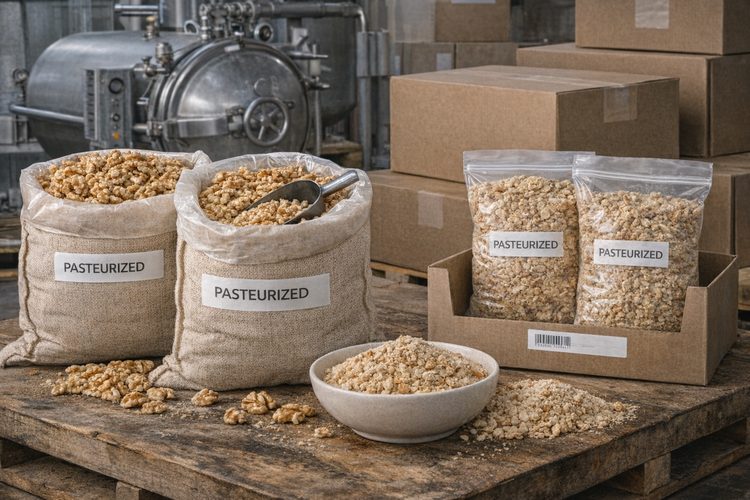
Illustrated placeholder for Pasteurized Walnuts
Product overview

Pasteurized walnuts from a California commercial workflow

Pasteurized walnut programs are typically chosen when the buyer must source walnuts that have already passed through a validated lethality or microbial reduction step as part of a broader food-safety plan. These programs are common in industrial ingredient supply, private label retail, contract manufacturing, regulated customer channels and export projects where the specification requires more than a standard raw agricultural presentation.

In practical buying terms, pasteurized walnuts sit at the intersection of origin quality, kernel grade, process validation, packaging selection, document readiness and shipment timing. A strong program brief usually defines not only the walnut format, but also the treatment expectation, downstream use, packing environment, market of sale and whether the product will be used as a ready-to-use ingredient or undergo further transformation.

Atlas helps buyers structure that brief so operational, technical and commercial variables are aligned early: kernel grade and size, color expectations, tolerance profile, moisture target, packaging type, coding, lot traceability, export documentation and shipment rhythm can all influence feasibility, price and lead time.
Technical

Why technical definition matters

“Pasteurized walnuts” is not only a product label. It usually signals a process requirement. Buyers may need a validated treatment, defined microbial reduction expectation, process approval pathway, specific packaging environment, handling controls and documents that support internal quality review or customer onboarding.

Because downstream uses vary, a bakery inclusion program, an RTE snack pack and an ingredient for further thermal processing may not share the same technical requirements even if the same walnut grade is involved.

Commercial

Why commercial planning matters

Treatment method, kernel grade, packaging choice, lot size, inventory position, document scope and delivery destination all shape the commercial structure. Buyers who define these early usually reduce rework during sampling, approval and shipping. That is especially important for private label, export and repeat monthly purchase programs.

A pasteurized walnut inquiry becomes far more actionable when it includes volume cadence, packaging format, lead-time target, destination market and the buyer’s intended use.

Quick buying snapshot

What a buyer usually needs to define up front

Product brief
  • Kernel presentation: halves, halves & pieces, light pieces, medium pieces, industrial cuts or custom target
  • Color expectation and defect tolerance range
  • Pasteurization requirement and any required supporting documentation
  • Moisture, water activity or shelf-life sensitivity if applicable
  • Ready-to-eat use versus further manufacturing use
  • Salted, unsalted, raw-after-treatment or future roast/season direction
Commercial brief
  • Pack style: bulk carton, poly-lined case, foodservice pouch, retail pouch or private label setup
  • Estimated volume: MOQ trial, pallet program, monthly requirement or container plan
  • Domestic versus export shipment structure
  • Destination market and any label language or compliance notes
  • Target ship window, replenishment rhythm and inventory strategy
  • Incoterm preference, consolidation needs and document requests
Technical detail

How buyers typically evaluate pasteurized walnut programs

1. Food-safety treatment

The main technical question is whether the walnut must arrive with a validated intervention already completed. Depending on the program, the buyer may ask for a treatment statement, validation summary, process description, lot identification, COA support or a supplier quality package tied to internal approval.

Some customers define the requirement broadly as “pasteurized,” while others specify the expected control outcome or require review of the process route used by the approved processor. Clarifying this point early prevents mismatch between procurement, QA and production teams.

2. Raw material and kernel selection

Pasteurization does not eliminate the importance of raw walnut quality. Buyers still need to define kernel type, crop-year expectation, color profile, breakage level, defect tolerance, flavor condition and intended downstream behavior. Products intended for premium visible inclusion often require different grade logic than products intended for grinding, pieces or blended ingredient systems.

3. Physical and chemical attributes

A typical review may include moisture, sensory condition, size profile, foreign material controls, shell fragment tolerance, visual sorting outcome, oxidation sensitivity, rancidity risk management and packaging barrier selection. For more demanding programs, the buyer may also request water activity guidance or internal stability expectations for a specific finished product environment.

4. Functional performance in application

Bakery inclusions, cereal blends, toppings, fillings, bars, nut pastes and snack packs each stress the walnut differently. Some applications prioritize visual appearance and light color, while others prioritize oil release, grind behavior, bite, cut size consistency or seasoning adhesion. The same pasteurized walnut product is not automatically ideal for every application.

Specification logic

Typical specification areas in a pasteurized walnut inquiry

A robust inquiry normally combines commercial wording with specification language. Buyers often reference an internal spec sheet, customer spec, private label pack brief or quality agreement. Even if final values remain subject to approval, the commercial conversation moves faster when the following areas are addressed.

Specification area What buyers usually clarify Why it matters
Format Halves, halves & pieces, pieces, recipe grade, granules, meal or ingredient cut Determines visual quality, yield and application fit
Treatment requirement Pasteurized status, required documents, customer approval pathway Links procurement with QA and compliance review
Color and appearance Extra light, light, light amber mix, visible defect tolerance Critical for retail, bakery topping and premium inclusion uses
Physical tolerances Breakage, shell fragments, foreign material, size distribution Affects process reliability and claims risk
Chemical and sensory Moisture, freshness, flavor, oxidative condition Supports shelf-life and sensory acceptance
Micro or QA documentation COA, treatment statement, allergen statement, origin declaration Required for onboarding, audits and import files
Packaging Net weight, inner liner, gas flush, retail or bulk labeling Direct impact on stability and logistics cost
Shipment plan Palletization, reefer need, domestic truckload, LCL or FCL Defines operational feasibility and landed cost
Applications

Where pasteurized walnuts are commonly positioned

Industrial food manufacturing
  • Granola, cereal and muesli systems
  • Nutrition bars and functional snack bars
  • Bakery inclusions for breads, rolls, cookies and cakes
  • Brownie, muffin and pastry fillings
  • Confectionery inclusion and topping systems
  • Dairy alternative products and plant-based formulations
  • Nut pastes, walnut butter and ground walnut ingredients
  • Salads, meal kits and savory topping systems
Retail and foodservice
  • Branded and private label retail pouches
  • Club-store and value pack programs
  • Foodservice back-of-house ingredient supply
  • Bakery chains and commissary production
  • Hotel, catering and institutional kitchens
  • Ingredient resale to secondary packers
  • Specialty natural foods and premium grocery ranges
  • Multi-market export assortment planning
Packaging & handling

Packaging options and storage planning

Bulk and industrial pack styles

Pasteurized walnut programs are often packed in bulk corrugated cases with liners, foodservice bags, larger ingredient sacks or retail-ready units depending on the route to market. Choice of pack is not cosmetic: it affects shelf-life behavior, warehouse efficiency, pallet density, repacking cost and freight economics.

  • Bulk carton with food-grade inner liner
  • Poly-lined corrugated case for industrial handling
  • Foodservice pouch or intermediate bag format
  • Retail pouch, stand-up pouch or branded consumer pack discussion
  • Case coding, lot traceability and pallet label control
  • Optional secondary packaging or export overpack planning
Storage and distribution logic

Walnuts are naturally oil-rich and sensitive to heat, oxygen and storage discipline. For that reason, commercial planning often includes warehouse conditions, stock rotation, transit duration, container choice and the expected destination climate. Shelf-life discussions should always be tied to the final packaging system, handling conditions and end-market distribution model rather than treated as a single universal number.

  • FIFO and lot rotation planning
  • Temperature-aware storage strategy
  • Transit-time review for export destinations
  • Pallet pattern and loading efficiency
  • Short-dated versus long-program inventory logic
  • Alignment between ship date and customer receiving window
Quality package

Documents and quality support buyers often request

A pasteurized walnut program typically needs more than a commercial invoice. Technical and compliance teams may request a document set appropriate to the market and customer category. The exact package depends on the project, but buyers commonly ask for product identification, process support and shipping records that fit internal vendor approval or import procedures.

Atlas can organize inquiries around the practical documentation needs of the program so expectations are discussed early, especially for export, private label and controlled-customer supply.

Commercial planning

How pasteurized walnut programs are typically structured commercially

Spot, repeat and contract business

Some buyers begin with a test order or short pilot run, then shift into monthly replenishment once the specification and packaging are approved. Others work on a forward-looking contract basis tied to forecast volume, campaign timing or private label launch dates. The right structure depends on price exposure, inventory policy, seasonality and the buyer’s confidence in demand planning.

Variables that influence price
  • Kernel grade, color and cut size
  • Availability of the requested lot profile
  • Pasteurization requirement and workflow complexity
  • Packaging material and packing labor intensity
  • Order size, cadence and pallet or container efficiency
  • Destination, shipping mode and document set required
  • Private label artwork, coding or labeling scope
  • Urgency, booking window and scheduling constraints
MOQ and launch planning

Early-stage projects often need commercial flexibility: sampling, pilot MOQ review, label validation, packaging approval and a first-shipment timeline that works with production launch. Large ongoing programs typically focus instead on stable replenishment, consistent grade logic, transit reliability and reducing total delivered cost through efficient pack and freight choices.

Private label considerations

Private label projects usually require more than product sourcing. They may involve branded pack format, label hierarchy, retail case count, barcode structure, shelf-life statement, destination language, master carton marks and launch-date coordination. Buyers who provide artwork timing, channel target and forecast range early can reduce costly packaging revisions later in the process.

Logistics

Export, domestic distribution and shipment planning

Domestic programs

Domestic supply may involve pallet shipments, partial truckload, full truckload or warehouse replenishment. Important details include delivery appointment windows, pallet configuration, lot segregation, label handling, receiving specification and whether the product will be stored short-term or fed directly into production.

Export programs

Export planning normally adds market-specific labeling, customs documentation, lead-time buffers, booking coordination, container planning and destination-specific handling considerations. The buyer should identify whether the program is directed to distributor stock, local repacking, manufacturing input or direct retail distribution, since each route can change pack and document requirements.

Transit and inventory risk

Because walnuts are sensitive products, long transit times, heat exposure, delayed customs release and poor stock rotation can create avoidable quality pressure. Commercial planning therefore benefits from a combined view of shipping window, expected temperature exposure, local warehousing capability and the buyer’s real consumption rate after arrival.

Operational detail buyers should include
  • Ship-to country and city
  • Preferred port, inland point or final warehouse
  • Truck, LCL or FCL preference
  • Any importer or retailer onboarding rules
  • Label language and carton marking requirements
  • Requested shipping documents and timing
Procurement workflow

A practical path from inquiry to supply program

The fastest projects usually follow a simple sequence. First, define the product and commercial brief. Second, confirm feasibility against format, treatment, packaging and destination. Third, align on samples or documents if customer onboarding is required. Fourth, finalize order structure, labeling and shipment timing. Fifth, execute against an agreed pack and logistics plan.

This disciplined approach is especially useful when the walnut will move into private label, export or specification-heavy industrial uses where QA, procurement and production all need to sign off.

Buyer profiles

Who typically sources pasteurized walnuts

Food manufacturers

Bakeries, bar manufacturers, cereal producers, confectioners and savory processors often look for pasteurized walnuts when their internal food-safety plan or customer specification requires pre-treated nut ingredients.

Retail brands

Consumer brands and private label operators may prefer pasteurized product for retail pack ranges where process documentation, lot traceability and finished goods consistency are important selling and compliance factors.

Distributors and importers

Ingredient distributors and importers often need a commercially flexible supply partner that can help frame grade selection, documents, market-specific labeling and shipment structure for onward resale.

Foodservice and institutional channels

Foodservice programs may prioritize dependable pack format, warehouse handling and controlled replenishment over highly customized retail presentation, while still needing a clear quality and document package.

What buyers usually define
  • Application fit and downstream processing route
  • Kernel grade, cut size and visual expectation
  • Pasteurization requirement and approval pathway
  • Packaging choice and shelf-life expectations
  • Domestic versus export shipment plan
  • Volume profile, order rhythm and lead-time needs
  • Document package and destination compliance notes
  • Whether the product is for private label, foodservice or ingredient use
Let’s build your program

Discuss a pasteurized walnut requirement

Share the product format, target application, packaging style, document requirements, estimated volume and destination. Atlas can review the brief, assess commercial fit and organize the next step around samples, specifications, pricing structure or shipment planning.

Go to Contact Page
FAQ

Frequently Asked Questions

What is the main use of pasteurized walnuts?

Pasteurized walnuts are commonly used when the buyer needs a validated food-safety treatment before repacking, seasoning, roasting, further processing or use as a ready-to-use ingredient.

What formats can be discussed for pasteurized walnut supply?

Programs may be discussed around kernel halves, halves and pieces, light pieces, recipe pieces, industrial cuts, bulk ingredient packs, foodservice packs or private label retail presentations depending on the product brief and destination market.

Do buyers need to define the pasteurization method or only the pasteurized status?

Buyers should explain whether they only require a validated pasteurized status or whether they need a named treatment route, customer approval of the process, supporting validation records or a specific documentation package for internal compliance review.

Can pasteurized walnuts be supplied for private label or export projects?

Yes, those programs can be reviewed commercially. The key is to define the pack format, label scope, destination market, shipment structure, forecast volume and the documents needed so feasibility is assessed correctly from the beginning.

What commercial details have the biggest impact on price?

The main price drivers are walnut grade and size, color expectation, treatment requirement, pack style, order size, program cadence, destination, transport mode, timing urgency and whether the business is spot, repeat or contract-based.

What should buyers specify when sending an inquiry?

A strong inquiry includes target format, intended use, quality standard, packaging style, destination market, estimated volume, timeline, required documents and any compliance or customer-approval conditions tied to the project.

Are pasteurized walnuts suitable for bakery, snack and ingredient systems?

They are frequently considered for bakery inclusions, cereal and granola systems, snack mixes, bars, toppings, fillings, nut butters, ground ingredients and other applications where documented treatment and handling discipline are commercially important.

What documents are commonly requested for a pasteurized walnut program?

Depending on the market and customer, buyers may request product specifications, allergen statements, country of origin declarations, treatment support statements, certificate of analysis structure, traceability information and shipping documents aligned to the shipment route.

Do pasteurized walnuts still need careful storage and logistics planning?

Yes. Pasteurization does not remove the need for disciplined storage, stock rotation, temperature-aware handling, suitable packaging and transit planning. Walnuts remain oil-rich and quality-sensitive products.

Is this product only for large buyers?

Not necessarily. Some projects begin with samples, pilot quantities or first-launch MOQs, while others are structured as repeat pallet or container programs. The right approach depends on the stage of the buyer’s project and the complexity of the packaging and compliance brief.