Walnuts

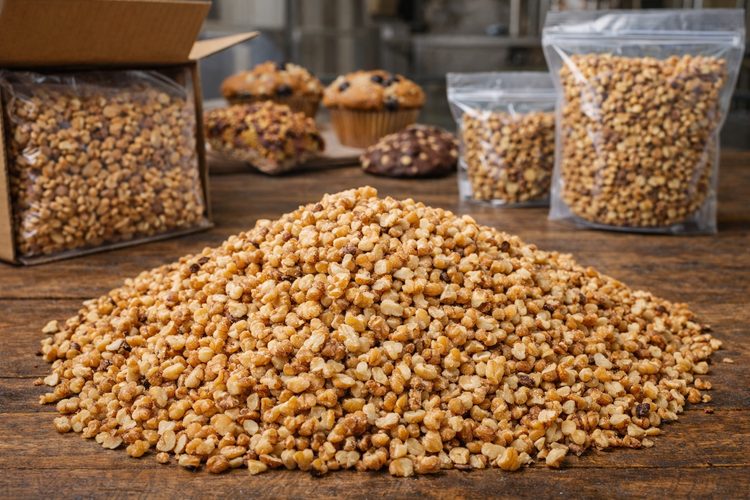
Diced Walnuts

Controlled particle formats for bakery, bars, cereals, confectionery, toppings and savory formulations where portioning, line performance and visual consistency matter.

Illustrated placeholder for Diced Walnuts
Product overview

Diced walnuts from a California commercial workflow

Diced walnuts are used by food manufacturers and ingredient buyers who need more control over particle size, inclusion visibility, bite profile, blend distribution and process repeatability than whole or larger walnut styles typically provide. Instead of treating the item as a generic chopped nut, many industrial buyers define diced walnuts as a functional ingredient with technical implications for depositing, mixing, enrobing, topping, filling, portioning and retail presentation.

Within a California-origin commercial workflow, diced walnut programs are usually assessed around cut range, raw or roasted state, fines tolerance, color expectations, packaging format, intended shelf-life and the handling conditions the product will face after packing. The same diced walnut specification may behave differently in cookies, cereal clusters, protein bars, chocolate systems, frozen desserts, fillings or ready meals, so application detail is one of the most important parts of a serious inquiry.

Atlas Global Trading Co. discusses diced walnut requirements with both technical and commercial context in mind. That means the inquiry is stronger when buyers share not only the product name, but also the intended use, target pack configuration, demand pattern, destination market, expected launch window, and any practical requirements around cost control, private label direction, logistics rhythm or downstream processing.
Technical

Technical buying focus

Diced formats help manufacturers control particle size, inclusion visibility, dosing accuracy, mouthfeel and line performance. Buyers commonly define target cut range, acceptable fines, raw or roasted state, visual consistency, pack type and application conditions such as mixing intensity, bake exposure, enrobing, topping use or secondary seasoning.

Commercial

Commercial planning focus

Diced walnut programs are often selected where line efficiency, yield predictability, multi-SKU usage and pack economics are as important as flavor. The commercial brief usually covers annual or monthly volume, trial versus recurring orders, packaging direction, destination market, lead time, pallet or container profile and whether the product is for industrial use, foodservice, retail or private label.

Why diced format matters

Particle control is often a processing decision, not just a size preference

In many food systems, the choice between halves, pieces and diced formats directly affects how the walnut ingredient behaves in production. A smaller and more controlled cut can improve distribution through dough, batter, cereal bases, chocolate masses and snack clusters. It can also help reduce random visual variation at pack fill, make portioning more consistent and support a more uniform bite profile across finished units.

For bar manufacturers, diced walnuts may help balance structure, visible nut identity and processing efficiency during slab forming and cutting. In cookies and bakery mixes, the right cut can influence dough spread, deposit flow, surface presentation and the appearance of inclusions after baking. In cereal, topping and confectionery use, a tighter size brief can improve blend uniformity and reduce the risk of over-dominant large pieces or excessive fines affecting visual cleanliness.

Because of these differences, sophisticated buyers often specify diced walnuts based on function rather than broad descriptive terms alone. They may define the product through an application brief that covers cut expectation, roast condition, usage percentage, downstream handling, target shelf-life, and whether the ingredient must perform in high-speed production, manual assembly, export logistics or premium retail presentation.

Technical detail

Key specification points buyers commonly review for diced walnuts

Cut definition

Size range and piece distribution

Cut range is usually one of the most important parts of a diced walnut brief. Depending on the application, buyers may prioritize a tighter distribution, a more open commercial range, reduced overs, or limited fines. The right balance depends on product appearance, dosing equipment, blend behavior, and the tolerance of the final application for dust or small particles.

  • uniformity for premium visual presentation
  • repeatable flow through hoppers and feeders
  • balanced distribution in batters, doughs and mixes
  • control of oversize pieces in bars and chocolates
  • management of fines for cleaner pack appearance
Process state

Raw, roasted or application-ready direction

Not all diced walnut programs use the same process state. Some buyers want raw diced material for further baking or coating, while others need roasted product for immediate flavor impact. The preferred state affects color, aroma, brittleness, handling behavior and the packaging protection needed across storage and transit.

  • raw formats for secondary processing
  • roasted formats for ready-to-use inclusion value
  • different handling behavior by process state
  • application-specific flavor and texture targets
  • packaging needs linked to finished product design
Application fit

How diced walnuts are used across industries

Diced walnuts are frequently chosen when a manufacturer wants visible nut identity without the operational challenges of larger kernels. The format can support uniform distribution, cleaner topping coverage, more controlled weight usage and predictable bite in finished products.

  • energy and nutrition bars
  • cookies, muffins and cake systems
  • chocolate bars, clusters and pralines
  • granola, muesli and breakfast cereals
  • ice cream, frozen dessert and dairy toppings
  • restaurant and foodservice garnish programs
  • savory snack coatings and prepared meals
  • retail baking ingredients and consumer packs
Commercial fit

Why buyers choose diced formats commercially

From a commercial standpoint, diced walnuts can help standardize usage across several SKUs and simplify formulation planning. A controlled diced format may support better ingredient budgeting, cleaner portioning, more consistent pack appearance and broader compatibility across bakery, bar, cereal and topping programs.

  • easier portion planning across multiple products
  • good fit for repetitive industrial runs
  • potentially cleaner visual presentation in finished goods
  • more defined inclusion behavior in compound systems
  • stronger alignment with premium or functional ingredient briefs
Packaging and logistics

Pack structure matters once the cut and application are defined

Bulk and industrial

Carton-based ingredient programs

Industrial diced walnut business is often built around bulk packaging designed for efficient storage, line-side handling and pallet management. Buyers generally review inner liner format, carton practicality, case weight logic, pallet stability and the handling conditions the material will experience in warehouses or production environments.

  • bulk carton and liner structures
  • ingredient-oriented palletization
  • warehouse and line handling efficiency
  • economics for recurring production schedules
  • alignment with domestic or export distribution plans
Retail and private label

Consumer-facing packaging logic

Retail-ready diced walnut programs usually require a broader commercial brief. Buyers may need support around finished pack size, fill weight, label direction, shelf presentation, destination language, private label timing, outer case information and freight efficiency. When the program is export-oriented, market-specific presentation and transit strategy become even more important.

  • stand-up pouches and other retail-ready formats
  • consumer pack size and merchandising logic
  • private label packaging coordination
  • destination market labeling direction
  • case count and pallet utilization planning
Quality and handling notes

Important technical considerations in diced walnut programs

Because diced walnuts are a cut ingredient rather than an intact kernel style, handling discipline matters. The selected format must be realistic for the intended process. A buyer focused on bakery inclusion may tolerate a different particle profile than a buyer developing premium chocolate bars or visible retail baking ingredients. Even when the product name is the same, the right diced walnut brief depends on how the material will be mixed, transported, filled, baked, coated or displayed.

Technical discussions often address particle consistency, color appearance, cut cleanliness, pack protection, downstream breakage risk and whether the product must remain visually distinct after processing. Manufacturers also look at how the diced walnuts behave during blending, deposit flow, dough folding, enrobing, cereal coating or top-of-pack finishing. This is why application-specific review is usually more useful than a generic request for “chopped walnuts” alone.

When a buyer has benchmark material, reference photos or an existing finished product, the commercial review can move faster. Even a simple description of where the walnut appears in the finished product, how large it should look, or how prominent the bite should be can help refine the discussion around particle profile and commercial suitability.

Commercial planning

How buyers usually frame a serious diced walnut inquiry

Volume

Spot need versus rolling program

A quotation discussion is usually more productive when the buyer clarifies whether the project is a sample review, product development stage, launch order, recurring monthly requirement, seasonal program or full container-based sourcing plan. Volume rhythm affects pack choice, supply planning and freight efficiency.

Timing

Lead time and launch coordination

Buyers should ideally specify their target ship window, first receipt date and whether the program depends on label approval, internal product testing or customer launch timing. This is especially important for retail and export-oriented projects where packaging and logistics coordination may influence the schedule.

Market

Domestic versus export requirements

Destination market affects outer case information, pack structure, label direction and freight planning. If the product is intended for export, import-side review, language requirements, document expectations and shipment mode should be discussed early in the commercial brief.

Program structure

Industrial, foodservice, retail or private label

The same diced walnut item may be commercially structured very differently depending on whether it is sold as an ingredient input, packed for foodservice, positioned for retail baking, or developed as a private label SKU. Clear channel definition helps align the review process from the start.

What buyers usually define

Useful details for a quotation request

  • intended application and finished product type
  • preferred cut range or size expectation
  • acceptable level of fines or dust
  • raw, roasted or other process state
  • bulk, foodservice or retail pack format
  • case configuration and handling preference
  • monthly, quarterly or annual volume estimate
  • target first order and replenishment rhythm
  • destination market and shipment plan
  • private label, ingredient or export direction
  • shelf-life goals and packaging expectations
  • any visual, color or usage benchmarks
Program support

California-origin supply discussions for ingredient and export buyers

Atlas Global Trading Co. positions diced walnuts within a broader California nut ingredient and export support model. For many buyers, the value is not just access to a walnut cut format, but the ability to frame the requirement clearly around application, market route, pack style and commercial timing. This is especially relevant for industrial buyers managing multiple production lines, foodservice distributors needing repeatable pack logic, or private label teams balancing launch schedules with supply execution.

A well-structured diced walnut request can reduce back-and-forth by defining the commercial intent from the beginning. Buyers who share realistic annual usage, required shipment rhythm, target pricing logic, or whether the project is still in validation phase often receive a more practical review. The stronger the brief, the easier it becomes to align product format, packaging direction and next-step commercial discussion.

Let’s build your program

Discuss a diced walnut requirement

Use the contact form to share the intended application, cut preference, process state, pack style, estimated volume and destination market. Atlas can review the brief and organize the next commercial step from a California supply and packaging perspective.

Go to Contact Page
FAQ

Frequently Asked Questions

What are diced walnuts mainly used for?

Diced walnuts are widely used in energy bars, cookies, chocolates, granola, cereals, bakery fillings, dessert toppings, frozen desserts and savory formulations where controlled particle size, visible inclusion identity and repeatable mouthfeel are important.

Can Atlas supply diced walnuts for export or private label projects?

Atlas can discuss diced walnut programs for domestic, export, industrial or retail-oriented projects and help align the product brief with packaging direction, destination market requirements and commercial planning, subject to the final application and supply structure.

What should buyers specify when asking for diced walnuts?

Buyers should ideally share the intended application, preferred cut range, acceptable fines level, raw or roasted state, packaging style, destination market, annual or monthly volume, shelf-life expectations and target shipment timing so the inquiry can be evaluated properly.

Why do manufacturers choose diced walnuts instead of larger kernel styles?

Manufacturers often choose diced walnuts to improve line handling, distribution in finished products, weight control, visual consistency and bite uniformity. The format can also make it easier to standardize formulations across several SKUs.

Can diced walnuts be supplied in different cut styles or pack formats?

Commercial programs can be reviewed around different cut expectations, raw or roasted state, bulk or retail-oriented packaging, and destination requirements. Final availability depends on the buyer’s technical brief, product configuration and commercial program needs.