Macadamias

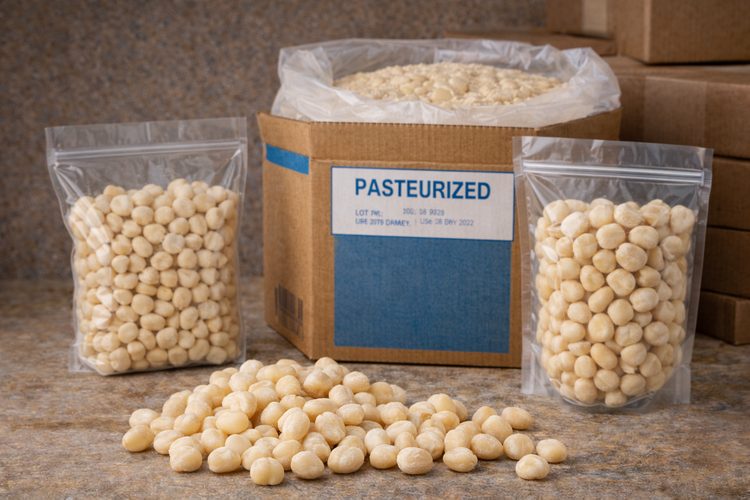
Pasteurized Macadamias

Pasteurized macadamia formats for customers requiring a food-safety treatment step before roasting, seasoning, grinding, repacking, private label conversion or direct ingredient use.

Illustrated placeholder for Pasteurized Macadamias
Product overview

Pasteurized macadamias from a California commercial workflow

Pasteurized macadamias are usually selected when the customer’s commercial brief includes a food-safety treatment requirement before the product moves into roasting, seasoning, chopping, grinding, repacking or final retail presentation. In these programs, the buying decision is not based only on kernel grade or price. It also depends on how the product fits into the buyer’s documented process, customer specification and downstream manufacturing or packing sequence.

For technical buyers, the key question is often how the pasteurized format integrates with the next step. Some customers need a treated input for further roasting. Others need pasteurized kernels for foodservice, private label or direct ingredient use. That means the specification should be built around the real application, including kernel style, appearance expectations, packaging method, handling conditions and documentation needs.

For commercial buyers, pasteurized programs often involve additional planning around lead time, lot control, packaging, shipment timing, export requirements and customer approvals. Atlas helps organize those variables into a workable supply model rather than treating the request like a standard raw or roasted commodity inquiry.
Technical

Technical buying focus

Pasteurized formats are selected when customers require a food-safety treatment step or a specific program requirement before roasting, seasoning, grinding or packing. Technical review often centers on kernel style, post-treatment handling, packaging integrity, traceability, downstream process fit and how the treated product will be protected through storage, transport and later use.

Commercial

Commercial planning focus

Commercially, pasteurized programs are often linked to regulatory, customer-specification, private label or foodservice requirements and may affect lead time, documentation flow, pack selection and overall cost structure. Buyers typically need clarity on packaging, shipment model, order rhythm and whether the treated product will be used as an ingredient or converted into a finished good.

Why pasteurized programs are requested

Where pasteurized macadamias fit commercially and technically

Food-safety driven supply

For customers with defined treatment requirements

Some buyers require pasteurized nuts because their internal supply policy, private label specification, retail customer expectation or foodservice account requires a treated input before the product enters the next manufacturing or packing stage. In these cases, pasteurization is part of the supply program itself rather than an optional processing preference.

  • fit for food-safety driven programs
  • aligned with customer specification workflows
  • supports documented supply planning
  • useful where a treated input is commercially required
Private label and retail

For brand and customer-owned retail programs

Private label programs may require treated kernels before further flavoring, final packing or retail release. These projects usually involve a broader commercial discussion covering packaging, label workflow, customer approval, lot identification and the timing between treated product release and finished-goods conversion.

  • customer-owned retail supply chains
  • fit for co-pack and repack workflows
  • supports structured QA and commercial review
  • useful for multi-step retail programs
Foodservice and institutional use

For buyers managing service-channel requirements

Foodservice and institutional buyers may prioritize treated product where their procurement standards, kitchen-use expectations or account requirements call for a pasteurized input. In these programs, pack size, handling convenience, case configuration and repeatability are often as important as the treatment requirement itself.

  • service-channel fit
  • pack sizing for operational use
  • repeatable replenishment planning
  • case structure aligned to distributor handling
Ingredient conversion

For grinding, chopping, roasting or further processing

Pasteurized macadamias may also be purchased as an ingredient input for later size reduction, roasting, seasoning, blending or incorporation into another finished product. In those cases, the important question is whether the treated kernel format aligns with the next process step and the customer’s handling logic after receipt.

  • ingredient supply for downstream conversion
  • fit for roasting or seasoning after treatment
  • support for chopping, grinding and blending
  • commercial structure built around processing flow
Food-safety program fit

Pasteurized supply works best when matched to the real customer requirement

Not every macadamia program requires pasteurized product. Buyers typically select it when their specification, account requirement or operational policy calls for a treated input. That means the most useful inquiry is one that explains not only the product format, but also why the pasteurized state is required and what happens next in the supply chain.

Some buyers need pasteurized kernels for direct use. Others need them only because the material will enter a customer-controlled packing or manufacturing environment that requires treated inputs. The clearer that context is, the easier it becomes to align kernel format, packaging, documentation and commercial timing with the real program.

Technical detail

Technical points buyers commonly review for pasteurized macadamias

Kernel format

Whole, halves or smaller pieces depending on use

Pasteurized programs may still vary by kernel presentation. Some customers want whole kernels for premium use or later roasting. Others need smaller formats for ingredient conversion. The correct format should reflect the next step in the manufacturing or packing process rather than default to a general grade description.

Post-treatment use

How the product will be handled after treatment matters

The technical brief should define whether the kernels will be roasted, seasoned, ground, chopped, repacked or sold directly after pasteurization. That downstream step influences packaging choice, handling priorities and how the supply program should be structured.

Appearance and condition

Visual requirements should match the end channel

Visible retail use, premium foodservice presentation and industrial transformation programs may all have different expectations for appearance. The commercial fit improves when the buyer states whether visual quality is central to the application or secondary to processing functionality.

Packaging integrity

Protection after treatment is part of the specification

Once the treated product is prepared for shipment, packaging becomes especially important in supporting handling integrity, lot control and storage practicality. Buyers often review pack style, liner structure, case format and pallet pattern as part of the complete program.

Traceability

Lot identification and documentation are key

Pasteurized programs often require tighter attention to lot control, release identification and supporting documentation. This is particularly relevant where the material will move into another managed manufacturing environment, a foodservice distribution system or a customer-owned retail program.

Storage and flow

Warehouse conditions and timing should be defined

Storage conditions, shipment windows and the time between treatment and downstream use may all matter commercially. Buyers generally benefit from sharing how quickly the product will move after receipt and whether any intermediate warehousing or repacking is planned.

Processing route

Pasteurized input for later roasting or seasoning

Some programs use pasteurized macadamias as the starting point for a later roast or flavor application. In these cases, the product brief should explain the intended downstream conversion so kernel style, packaging and commercial timing align with the actual manufacturing plan.

Grinding and chopping

For ingredient transformation after treatment

Ingredient processors may need pasteurized kernels that will later be chopped, milled, ground or blended into another system. These programs usually focus more on process fit, pack practicality and traceability than on shelf-ready appearance.

Direct packing use

For customers filling or packing treated kernels

Some buyers need treated kernels that can move directly into a packing or portioning environment. In those cases, the commercial discussion often includes packaging transfer logic, coding expectations, lot control and the timing between product arrival and customer packing operations.

Customer approval logic

Pasteurized programs often require a more complete brief

Compared with general kernel supply, pasteurized programs often benefit from a more structured technical and commercial inquiry because the product may be tied to approvals, customer protocols or controlled supply workflows.

Packaging options

Packaging and supply formats commonly discussed

Industrial ingredient supply

Bulk formats for processors and co-manufacturers

Industrial users often prioritize packaging that preserves product condition after treatment while supporting receiving efficiency, warehouse handling and controlled use in a manufacturing setting.

  • bulk bag and carton-style discussions
  • pack protection through storage and transit
  • warehouse-friendly case structures
  • pallet layouts aligned to industrial handling
Foodservice packing

Operational pack sizes for service-channel use

Foodservice accounts often need formats that are practical to handle, easy to store and commercially sensible for repeat distribution. These projects can place added emphasis on case count, pack durability and replenishment rhythm.

  • service-channel pack sizing
  • case formats suited to distribution
  • operationally practical unit sizes
  • repeat-order planning support
Retail conversion

For private label, repack or branded programs

Where the treated product will later become a finished retail good, packaging discussions may extend into repack flow, lot transfer, customer labeling requirements and how the treated kernels move efficiently into the next stage of conversion.

  • bulk-to-retail conversion planning
  • private label preparation
  • support for repacking workflows
  • compatibility with customer packing programs
Export packing

Transit-conscious packaging for international programs

Export buyers often review case strength, pallet integrity, liner protection, carton markings and loading practicality before moving forward. Packaging can influence both landed cost and how well the treated product moves through destination handling and storage.

  • export-ready pack planning
  • case marking and pallet review
  • destination handling compatibility
  • shipment efficiency and protection
Commercial planning

How pasteurized macadamia programs are commonly structured

Commercial planning for pasteurized macadamias usually starts with the reason the treated format is required. A buyer sourcing for foodservice may have a different order profile and packaging need from a customer building a private label program or a processor using treated kernels as an input for further conversion. Once the intended use is clear, the commercial model becomes easier to structure around volume, pack format, shipment frequency and lead-time sensitivity.

Compared with general raw kernel supply, pasteurized programs may require more front-end coordination around documentation, treatment-related program requirements, packaging alignment and customer approval flow. Atlas helps buyers organize that discussion so the quote reflects the real commercial model rather than only the base product description.

Order profile

Project-based, repeat contract or managed replenishment

Some buyers need a one-time treated lot for a customer program, while others require a repeatable replenishment schedule tied to manufacturing or service-channel demand. The order pattern influences packaging, timing, inventory strategy and price structure.

MOQ logic

Minimums depend on program scope and pack format

MOQ is usually influenced by product format, packaging method, documentation scope, destination and whether the project is straightforward ingredient supply or part of a broader private label, repack or export program.

Lead-time logic

Timing depends on product readiness and commercial alignment

Lead times may be shaped by treatment-related program requirements, packaging preparation, documentation flow, customer approval timing and freight booking. Buyers with fixed launch or delivery windows generally benefit from sharing those dates early.

Cost drivers

Main factors affecting the commercial model

Commercial structure may depend on kernel style, packaging choice, program complexity, shipment destination, order volume, export handling, documentation requirements and whether the treated product is moving into ingredient conversion, foodservice or retail channels.

Export readiness

What export buyers usually review before moving forward

Commercial alignment
  • destination market and route
  • intended use after import
  • shipment timing and freight model
  • pack declaration and carton identification
  • importer, distributor or processor handling needs
  • documentation flow before dispatch
Operational alignment
  • pack protection through transit
  • pallet stability and case layout
  • lot traceability through shipment
  • destination warehouse compatibility
  • single-SKU or mixed-SKU planning
  • coordination between release and loading
Inquiry checklist

What buyers should include when requesting pasteurized macadamias

A stronger inquiry usually leads to a faster and more commercially useful response. The most helpful starting information includes the intended application, the reason the pasteurized format is required, kernel style, packaging preference, expected volume, destination market, timing and whether the product will be used directly or processed further after receipt.

Where the project involves private label, co-manufacturing, foodservice or export resale, buyers also benefit from noting whether the program is a pilot order, a launch requirement or a repeat replenishment model. That context helps align the technical review with the actual commercial pathway.

What buyers usually define
  • application fit and downstream processing route
  • treatment-driven supply requirement
  • kernel style, appearance and packaging needs
  • domestic versus export shipment model
  • volume profile, order rhythm and lead-time needs
  • traceability and documentation requirements
Let’s build your program

Discuss a pasteurized macadamias requirement

Use the contact form to share the application, kernel format, packaging style, expected volume, destination and required timing. Atlas can review the brief and help organize the next technical and commercial step.

Go to Contact Page
FAQ

Frequently Asked Questions

What are pasteurized macadamias commonly used for?

Pasteurized macadamias are commonly discussed for private label, foodservice, ingredient supply, co-manufacturing and customer-specification programs where a food-safety treatment step is part of the commercial requirement.

Why do buyers request pasteurized macadamias?

Buyers often request pasteurized macadamias when their customer specification, internal food-safety program, retail requirement, foodservice policy or process design calls for product that has undergone a defined treatment step before further use or packing.

Can Atlas supply pasteurized macadamias for export or private label projects?

Atlas can discuss pasteurized macadamia programs for domestic or export-oriented business and can review ingredient supply, foodservice, repacking, private label or selected retail directions where the commercial brief supports the project.

What should buyers specify when asking for pasteurized macadamias?

Buyers should share the intended application, kernel format, whether additional roasting or further processing will follow, packaging format, destination market, expected volume, documentation needs and target timing so the inquiry can be assessed accurately.

What technical points are commonly reviewed for pasteurized macadamias?

Common technical points include kernel style, visual quality, process route after pasteurization, packaging integrity, lot traceability, documentation expectations, storage conditions and compatibility with the buyer’s downstream manufacturing or packing system.

What commercial points usually affect a pasteurized macadamia program?

Commercial planning usually depends on product format, treatment requirement, packaging choice, order size, lead time, destination, documentation scope, private label needs and whether the product is being used for ingredient processing, foodservice, export resale or finished retail conversion.