Macadamias

Extra Fine Macadamia Meal / Flour

Fine flour-style macadamia ingredient for gluten-free baking, premium mixes, smooth fillings, desserts and precision formulation work.

Designed for buyers who need a tighter particle profile than standard meal and want a more even, refined texture in finished systems.

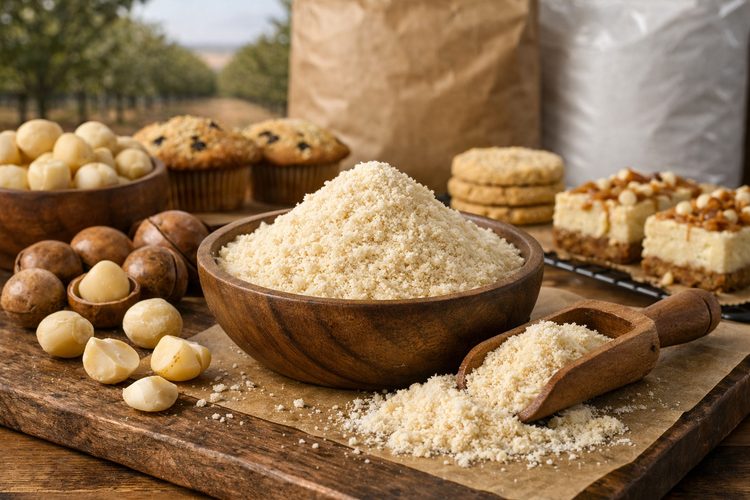
Illustrated placeholder for Extra Fine Macadamia Meal / Flour
Product overview

Extra Fine Macadamia Meal / Flour from a California commercial workflow

Extra fine macadamia meal / flour is generally selected when a manufacturer needs a more refined particle profile than conventional meal. The format is relevant where smoother texture, better dispersion, lower visible particulate character or more controlled blending performance are important to the end product. It is particularly useful in systems where coarse meal would be too rustic, visually inconsistent or operationally difficult to integrate.

Because macadamias are naturally rich in oil, extra fine formats are not just a simple grinding discussion. Buyers often evaluate how the flour behaves in dry blending, batter hydration, fat migration, depositability, finished bite and shelf-life performance. That means the practical application fit matters more than the name alone. A successful brief usually considers particle behavior, process state, pack style and the environment in which the ingredient will be stored and used.

This format is commonly positioned for premium bakery, batters, mixes, fillings, dessert systems, plant-based applications and clean-label concepts where smooth integration and premium nut character are both important.

Extra fine macadamia flour and meal are typically premium-positioned ingredients and perform best when the commercial brief is tied to a clear end use, processing route and pack plan.

Technical

Technical buying focus

Extra fine flour is used where a smoother texture, tighter particle distribution and more uniform blending behavior are important. Buyers commonly review not only the desired particle profile, but also how the ingredient behaves in blending, hydration, batter flow, filling texture, spread, browning and finished mouthfeel. In some applications, the flour must disappear into the system. In others, it must contribute nut richness without creating visible graininess or a sandy perception.

Since macadamia is an oil-rich nut, technical fit can depend on more than grinding fineness. Storage temperature, line environment, pack size and batch usage rate may all influence the way the product performs in production.

Commercial

Commercial planning focus

This format is commonly positioned for premium bakery, batters, mixes, plant-based systems and clean-label formulations where a buyer wants both functional contribution and premium story value. Commercial planning usually centers on application fit, volume stability, packaging choice, destination requirements, documentation and the degree of consistency needed from lot to lot.

Compared with standard meal, extra fine flour is often tied to more specification-sensitive programs, so the customer brief, approval path and intended channel can have a major impact on the commercial workflow.

Format definition

Why buyers choose extra fine flour instead of standard meal

The main difference is not only particle size. It is the role the ingredient must play inside the finished product.

Texture

Extra fine flour is generally preferred where the buyer wants a more polished, less granular finished texture. This is especially relevant in smooth batters, premium mixes, fillings, desserts and plant-based systems where coarse particles would be visible or disruptive.

Blending

A tighter and finer format can support more even distribution through dry systems or multiphase formulations. Buyers often consider whether the material must blend cleanly with other powders, integrate into a batter, or disperse evenly without visible variation from unit to unit.

Appearance

Where the finished product has a premium visual standard, extra fine flour may help reduce visible particulate irregularity. This can matter in premium bakery, plated dessert components, smooth fillings, coatings and certain retail-facing formulations.

Process behavior

Some applications require a finer ingredient to achieve better flow, deposition, sheeting, enrobing or batter performance. In these cases, extra fine flour may be discussed not only for sensory reasons but also for operational compatibility with the buyer’s own production line.

Particle and process discussion

Fine particle control matters because macadamia is naturally rich

Extra fine nut ingredients can behave differently from coarser formats because the surface area, oil expression and blending characteristics change as the grind becomes finer. For buyers, this means the discussion often extends beyond “flour” as a generic descriptor and into how the ingredient will handle in storage, batching and processing.

In bakery, the flour may influence spread, tenderness, browning and crumb perception. In fillings and dessert systems, it may affect smoothness, body and the way the product carries flavor. In plant-based systems, the buyer may care about suspension, richness, clean-label positioning and how the flour contributes to texture without creating a gritty finish. These practical outcomes are usually more important than any single naming convention.

Where the application is sensitive, buyers often benefit from aligning the brief around the specific end use rather than requesting a generic flour grade with no process context.

Application guidance

Where extra fine macadamia meal / flour is commonly used

Gluten-free bakery

Cakes, cookies, muffins, tart shells and specialty baked goods

In gluten-free or specialty bakery, extra fine macadamia flour may be chosen for premium texture, richness and a more refined bite. Buyers often review how it behaves in combination with starches, other nut flours and functional dry ingredients, especially where the finished product must avoid a gritty or uneven texture.

Premium mixes

Dry baking mixes and upscale prepared systems

For dry mixes, the finer particle profile can help achieve better visual consistency and more even distribution through the blend. This may matter in premium consumer-facing mix concepts where both ingredient story and finished product performance are central to the commercial proposition.

Batters and coatings

Smooth batter systems and fine crumb-style coatings

Extra fine flour can be discussed for batter systems or premium crumb applications where standard meal would be too coarse. The key consideration is how the ingredient contributes nut identity while maintaining adhesion, flow and finished texture appropriate to the product.

Plant-based and dessert systems

Frozen desserts, fillings, cultured alternatives and specialty formulations

In plant-based and dessert applications, buyers may use extra fine flour for richness, body and premium nut positioning. The finer profile can support a smoother eating experience in applications where larger particles would disrupt the intended finish.

Natural vs. processed direction

How buyers frame the process-state discussion

Depending on the application, the buyer may want a flour that preserves a lighter profile for downstream processing or a more developed flavor direction aligned to immediate end use. The choice is typically driven by final formulation, thermal history, color tolerance and how the ingredient must perform once incorporated into the finished system.

Premium ingredient logic

Why this format is usually tied to defined value-added use cases

Extra fine macadamia flour is often a premium-positioned ingredient rather than a broad commodity substitute. Buyers usually get the best commercial fit when the product is attached to a specific formulation objective, premium SKU concept or differentiated retail proposition rather than a loosely defined general-purpose use.

Quality and specification points

What buyers typically discuss before qualification

Final specifications depend on the project, but these are the common topics that usually shape both technical review and commercial planning.

Physical profile
  • Extra fine versus standard meal positioning
  • Expected particle consistency
  • Flow and blend performance
  • Visual smoothness in the final application
  • Tolerance for natural variation by lot
  • Suitability for the customer’s production method
Sensory profile
  • Color expectations relative to process state
  • Flavor strength and nut character
  • Mouthfeel contribution
  • Perceived richness in finished applications
  • Interaction with sweet or savory formulations
  • Compatibility with premium product positioning
Handling and shelf-life
  • Packaging integrity and liner choice
  • Storage expectations for an oil-rich flour
  • Warehouse and production staging considerations
  • Batch usage rate and pack size preference
  • Shelf-life expectations at shipment or arrival
  • Domestic versus export transit planning
Documentation and approval
  • Product specification sheet
  • Allergen declaration
  • Nutrition information
  • Traceability and lot identification
  • Import or destination documentation needs
  • Sample and internal approval workflow
Packaging and logistics

Pack style should match how the flour will actually be used

Extra fine flour programs are often more sensitive to handling and storage than coarser formats, so packaging strategy matters. Buyers commonly choose pack structures based on whether the product is used in regular production, pilot work, contract manufacturing or export distribution. A format that works well for a high-throughput bakery may not be ideal for an R&D-led premium mix developer or for a distributor supplying multiple smaller customers.

In domestic business, the pack plan is often tied to batching convenience, warehouse handling and reorder frequency. In export business, the discussion may extend to transit conditions, case stability, pallet efficiency, labeling details and the documentation flow required by the destination market.

California coordination can be especially useful where the buyer needs packaging, logistics and commercial documentation aligned inside the same sourcing workflow.

Commercial planning

What typically shapes the commercial structure

Quote logic

Commercial discussions usually consider whether the product is being purchased for a defined formulation, a premium branded concept, a pilot launch or a recurring industrial program. Buyers with a clearly defined use case and volume profile generally move faster from inquiry to workable quote.

Lead-time

Lead-time is usually influenced by the degree of specification control, packaging configuration, approval requirements, order size and whether the business is domestic or export-oriented. Trial and launch projects often need more coordination than routine replenishment orders.

Program types

Typical program structures include pilot lots for R&D validation, launch support for premium finished products, regular replenishment for industrial manufacturing, and retail-adjacent or private projects where packaging direction is part of the commercial scope.

Best-fit buyers

This format often fits premium bakeries, mix brands, gluten-free specialists, plant-based developers, dessert manufacturers, contract manufacturers and distributors serving value-added food categories rather than broad commodity channels.

What buyers usually define
  • Application fit and process route
  • Need for smoother texture or refined blend behavior
  • Packaging choice and shelf-life expectations
  • Domestic vs. export shipment plan
  • Volume profile, order rhythm and lead-time needs
  • Internal QA approval and documentation requirements
  • Whether the inquiry is for pilot, launch or routine production
  • Any retail, private label or consumer-facing packaging direction
Let’s build your program

Discuss an extra fine macadamia meal / flour requirement

Use the contact form to share the application, process expectation, pack style, volume and destination. Atlas can review the brief, align the commercial discussion and organize the next technical step.

Go to Contact Page
FAQ

Frequently Asked Questions

What is the main use of extra fine macadamia meal / flour?

Extra fine macadamia meal / flour is commonly used where a buyer needs a more refined and uniform format than standard meal. Typical uses include gluten-free baking, premium mixes, batters, fillings, desserts, plant-based systems and smooth formulation work.

How is extra fine macadamia flour different from standard macadamia meal?

Extra fine flour is generally discussed where tighter particle distribution, smoother texture and more even blending performance are required. Standard meal may be suitable where more visible texture is acceptable, while extra fine flour is often preferred in more refined systems.

Can Atlas supply extra fine macadamia meal / flour for export or private label projects?

Atlas can discuss extra fine macadamia meal / flour for domestic or export-oriented business and align packaging or private label direction where the commercial brief supports it.

What should buyers specify when asking for extra fine macadamia meal / flour?

Buyers should share intended application, preferred process state, packaging style, destination market, estimated volume, target timing and any important quality or documentation requirements so the inquiry can be assessed properly.

Is this format mainly for gluten-free applications?

No. Gluten-free baking is a common use case, but extra fine macadamia flour can also be relevant in premium mixes, batters, fillings, desserts, plant-based systems and other formulations that need a smoother nut ingredient profile.

What technical points matter most when buying this format?

Buyers usually focus on particle consistency, smoothness, oil behavior, color, flavor, blend performance, packaging integrity, shelf-life expectations and the suitability of the product for the intended process and end use.

Can Atlas support samples and qualification review?

Atlas can review the application brief, discuss sample direction and support the commercial process that typically leads from technical assessment to approval and program planning.

Why is extra fine macadamia flour usually treated as a premium ingredient?

This format is often used in specification-sensitive applications where texture, formulation behavior and premium positioning matter. As a result, buyers typically define the commercial case more tightly than they would for a broad general-purpose commodity input.