Almonds

Retail Packaging Programs

Retail-ready almond packaging programs for private label, branded distribution, club retail, e-commerce, foodservice repack and export channels. Built around product fit, packaging structure, labeling workflow and commercial execution from California.

Retail packaging programs for California almonds
Product overview

Retail packaging programs from a California commercial workflow

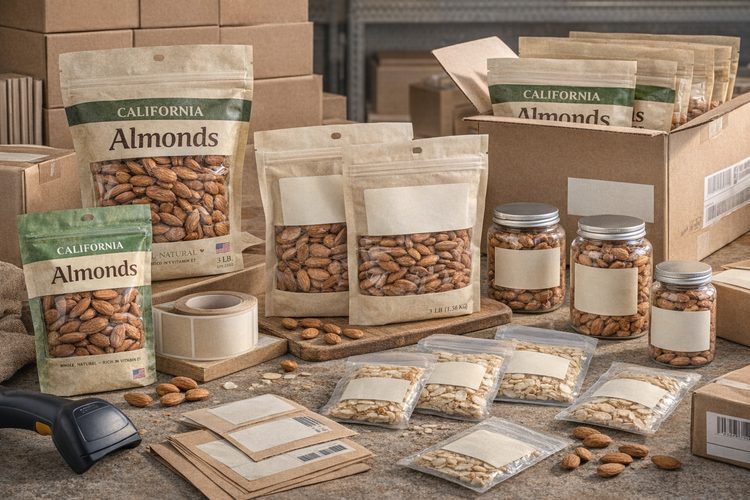
Retail packaging programs for almonds go far beyond simply placing product into consumer packs. They normally combine product selection, roast or process direction, pack size, packaging material, brand positioning, artwork readiness, coding, case packing, shelf-life planning, transport structure and destination-market execution into one coordinated supply plan.

Atlas Global Trading Co. approaches retail almond projects as commercial programs rather than one-dimensional packaging jobs. That means the conversation often starts with the buyer’s channel strategy: private label, branded grocery, club retail, e-commerce, specialty retail, foodservice repack or export retail. Once the route to market is clear, the program can be shaped around the right almond format, the preferred consumer-facing pack and the operational requirements needed to launch and repeat the business efficiently.

For many buyers, the packaging decision directly affects margin structure, freight efficiency, shelf presentation and sell-through. A pack that works for premium grocery may not be suitable for e-commerce, export retail or discount channels. That is why retail packaging programs are usually evaluated through both a technical lens and a commercial lens at the same time.
Technical

Technical buying focus

Retail almond programs usually require close attention to pack size, material selection, sealing format, coding position, case configuration, consumer handling, shelf-life planning, pallet stability and how the product should travel through domestic or export distribution.

Commercial

Commercial planning focus

Atlas helps buyers coordinate product choice, packaging structure, channel fit, label direction, launch timing, shipment rhythm and market positioning so the retail program works as a repeatable business rather than a one-off pack conversion exercise.

Program architecture

What a retail packaging program usually includes

Most retail almond projects involve several linked decisions. Product, pack, label, case and logistics all affect one another. The stronger the initial brief, the more efficiently the commercial workflow can be evaluated.

Product selection

Choose the right almond presentation

Retail programs can be built around different almond formats depending on the consumer offer: natural whole almonds, roasted almonds, flavored almonds, sliced almonds, slivered almonds, chopped almonds or other value-added concepts. The chosen product should match the intended channel, price point and usage occasion.

Pack structure

Consumer pack format and usage logic

The retail pack needs to reflect how the product will be purchased, stored, displayed and consumed. Buyers often compare pack styles based on shelf presence, convenience, fill weight, unit economics, case count and the expected retail environment.

Channel fit

Match the pack to the retail route

Grocery, club, convenience, specialty, e-commerce and export retail channels do not behave the same way. Each channel may require a different weight architecture, case count, visual strategy or commercial pricing approach, even when the almond product itself is similar.

Repeatability

Build a program that can scale

Trial runs and pilot volumes can be useful, but long-term value comes from repeatable execution. That often means planning ahead for order frequency, forecast rhythm, seasonal peaks, artwork updates, replenishment lead times and export or domestic distribution continuity.

Packaging strategy

Retail packaging choices that affect shelf appeal and operating performance

In almond retail, packaging is part marketing tool and part supply-chain tool. The pack has to look credible on shelf, support the intended price positioning and still work operationally across filling, coding, packing, warehousing and shipment. A highly attractive pack can become inefficient if it is poorly configured for case count, pallet density or consumer handling.

Buyers typically review whether the program calls for stand-up pouches, pillow-style packs, jars, tubs, cartons, sachets, multi-pack concepts or other consumer-ready formats. The final decision often depends on target weight, product protection needs, display objective, route to market and how the product will be merchandised. E-commerce programs may prioritize transit performance and pack durability, while premium grocery projects may emphasize shelf impact and brand presentation.

Case configuration is also commercially important. Case count influences warehouse efficiency, freight loading, shelf replenishment rhythm and store handling. In export retail, outer-case structure and pallet planning often become just as important as the consumer unit itself because long-distance transport can affect how retail-ready product arrives in market.

Technical scope

Operational details that buyers often define before launch

Labeling workflow

Artwork, copy, coding and pack information

Retail programs usually require coordination around consumer-facing label content, brand or private label layout, coding location, lot traceability flow and any destination-specific wording or formatting that must be reflected before production planning can be finalized.

Shelf-life planning

Pack choice and stock rotation strategy

Shelf-life expectations are tied to product style, pack design, inventory speed and market route. Buyers commonly align packaging choice with the expected warehouse time, retail dwell time and replenishment cycle so that the program supports practical sell-through.

Case architecture

Case count, carton size and pallet logic

The right case structure can improve freight utilization, reduce handling inefficiency and support more predictable store replenishment. Club, discount, convenience and specialty retail channels may each require different case logic even when the consumer unit remains similar.

Execution timing

Launch windows and replenishment cadence

Seasonal launches, tender-based retail projects and ongoing branded lines each have different planning needs. Buyers often define artwork readiness, first shipment timing, reorder rhythm and promotional windows early so the commercial path is realistic.

Commercial detail

Why retail packaging programs are commercial programs, not just packing jobs

Brand and private label

Different objectives, different pack logic

Private label programs usually focus on retailer positioning, target margin, category fit and repeatable replenishment, while branded programs may place more emphasis on presentation, brand storytelling, visual differentiation and promotional flexibility.

Price architecture

Pack size influences the retail proposition

Consumer weight, outer case count and channel expectations all shape the commercial model. The right pack is often the one that balances shelf price, perceived value, freight cost, display practicality and target market competitiveness.

Forecast quality

Volume clarity improves program efficiency

A retail project becomes easier to assess when the buyer can indicate whether the business is a market test, chain listing, promotional program, seasonal item or recurring annual line. That forecast context helps frame purchasing and logistics decisions more accurately.

Destination structure

Domestic and export retail need different coordination

Domestic programs may prioritize regional distribution and replenishment timing, while export retail usually adds another layer involving shipment planning, destination entry requirements, longer transit considerations and channel-specific market coordination.

Route-to-market

Where almond retail packaging programs are commonly used

Almond retail programs are relevant across several channel structures. In grocery and specialty retail, consumer-facing packs often emphasize product quality, premium imagery and clear value communication. In club and value channels, larger pack sizes or multipack arrangements may be more commercially appropriate. In e-commerce, pack resilience and shipping practicality can become more important than shelf-display geometry alone.

Foodservice repack is another adjacent use case where buyer needs differ from standard grocery retail. The pack may still be consumer-style or semi-consumer-style, but the destination is a professional kitchen, catering workflow or hospitality operator rather than a supermarket shelf. Export retail adds further variables because the product needs to reach market in saleable condition with packaging and documentation aligned to the destination program.

For this reason, a retail packaging brief should identify not only the desired pack, but also the exact channel logic behind it. The same almond product may require a different packaging and case strategy depending on whether it is being sold in a premium supermarket, through an online marketplace, into a regional wholesaler or through a distributor serving multiple outlets.

Buyer checklist

Information that helps evaluate a retail almond packaging inquiry

Product brief
  • Almond type and format required
  • Natural, roasted, seasoned or value-added direction
  • Target consumer pack size or size range
  • Brand, private label or white-label positioning
  • Any visual or merchandising priorities
Packaging brief
  • Preferred primary pack style
  • Target case count and outer carton preferences
  • Coding or traceability expectations
  • Label workflow and artwork readiness status
  • Shelf-life expectations and storage logic
Commercial brief
  • Projected order size and annual forecast
  • Trial run, launch quantity or repeat business model
  • Retail channel and geographic scope
  • Target launch date and reorder rhythm
  • Required commercial timing for approvals
Logistics brief
  • Domestic or export destination
  • Preferred shipment mode and planning window
  • Pallet or container expectations
  • Distributor, importer or direct retail delivery structure
  • Any market-specific documentation requirements
Program types

Common retail packaging scenarios buyers discuss with Atlas

Private label launch

Retailer-owned consumer program

A retailer or distributor may want almonds packed under its own label, with commercial planning built around the target shelf position, expected volume and replenishment cadence.

Branded expansion

New market or channel rollout

A branded buyer may already have product identity and commercial positioning in place and need a packaging workflow aligned to the destination market or retail network.

Club retail configuration

Larger packs or multipack concepts

Club-oriented retail often requires different weight architecture, value communication and case logic from traditional grocery, so the program needs to be designed around those realities.

Export retail project

Retail-ready product for overseas channels

Export retail programs usually require tight coordination between consumer pack, case build, pallet planning, shipment structure and destination-market execution.

What buyers usually define
  • Almond format, roast state and channel use case
  • Consumer pack size, style and presentation direction
  • Labeling flow, coding and shelf-life expectations
  • Case count, pallet plan and shipment structure
  • Domestic versus export market strategy
  • Volume profile, launch timing and reorder needs
Let’s build your program

Discuss a retail packaging requirement

Use the contact form to share the almond product, pack format, label direction, estimated volume, destination market and launch timing. Atlas can review the brief and help organize the next commercial step around a California-based supply workflow.

Go to Contact Page
FAQ

Frequently Asked Questions

What is the main use of retail packaging programs?

Retail packaging programs are commonly used for private label, branded grocery, club store, convenience, e-commerce and export retail channels where product format, consumer-facing pack design, case configuration and shelf-life planning need to be coordinated together.

Can Atlas support private label or export retail almond programs?

Atlas can discuss domestic and export-oriented retail packaging programs for almonds and align the commercial brief around product format, pack style, labeling direction, destination requirements, shipment structure and program timing.

What should buyers specify when requesting a retail packaging program?

Buyers should normally share the almond format, roast or process state, target pack size, packaging style, brand or private label direction, target market, estimated volume, case configuration preferences, launch timing and any destination-specific labeling or documentation needs.

Which almond products can be considered for retail packaging programs?

Retail programs can be structured around several almond presentations depending on the project brief, such as whole almonds, roasted almonds, flavored almonds, sliced almonds, slivered almonds or other consumer-ready concepts suitable for the intended retail channel.

Why is packaging planning important in almond retail programs?

Packaging planning matters because the retail pack affects shelf appearance, storage efficiency, freight utilization, coding, shelf-life management, consumer convenience and how the product performs in grocery, club, e-commerce or export distribution.

What commercial factors influence a retail almond packaging project?

Commercial planning usually includes product choice, pack count, annual demand forecast, launch timing, order rhythm, artwork readiness, labeling workflow, case pack, pallet plan, destination market, shipping mode and whether the business is a trial run, seasonal promotion or ongoing program.

Can retail packaging programs work for club and e-commerce channels too?

Yes. Club and e-commerce channels often require different pack logic from standard grocery retail, but both can be part of a retail almond program when pack size, case structure, commercial positioning and route-to-market planning are clearly defined.

What helps move a retail packaging inquiry faster?

A strong inquiry usually includes the almond product required, target pack size, retail channel, annual or monthly volume estimate, destination market, artwork status, case preferences and intended launch window so the program can be reviewed more efficiently.