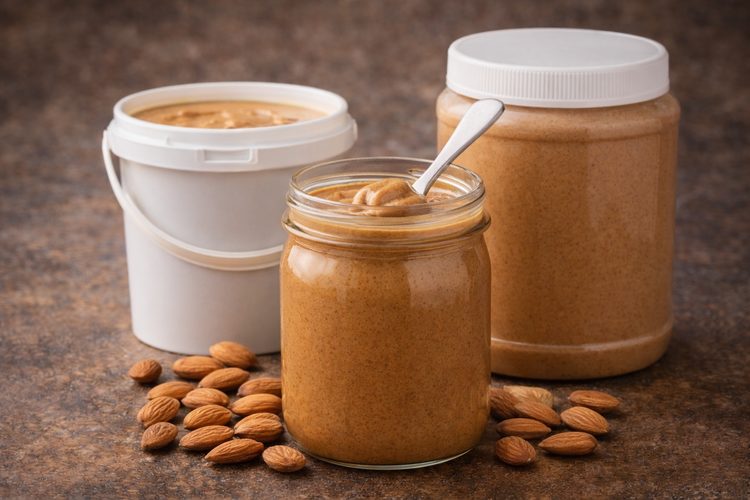
Commercially strong for premium ingredient positioning and supply-chain narrative.
Product overview
Almond butter from a California commercial workflow
Almond butter is a versatile nut-based ingredient and finished-product platform used across retail, industrial, foodservice and export channels. At a commercial level, buyers are usually not just sourcing “almond butter” as a generic item. They are sourcing a specific performance profile: roast character, grind style, spreadability, oil behavior, ingredient declaration, packaging system, shelf-life logic and cost position for the intended market.
Programs can be built around natural or roasted almond inputs, smooth or crunchy texture, more fluid or more structured consistency, and different commercial routes ranging from pails and drums for ingredient manufacturing to jars for premium consumer retail. That makes almond butter relevant not only for brands selling spreads, but also for manufacturers using it in bars, fillings, bakery inclusions, protein products, plant-based concepts, sauces and snack systems.
Atlas Global Trading Co. supports buyers who need a structured discussion around California-linked almond butter supply, including product fit, technical targets, packaging direction, documentation expectations and the commercial realities that affect lead time, MOQ, unit economics and repeat-order continuity.
This page is written for food and edible commercial use. Final suitability, nutrition claims, allergen statements, shelf life, process compatibility and market compliance should always be validated against the buyer’s own QA, regulatory and formulation requirements.
Programs may be tuned around grind profile, mouthfeel and finished-product use.
Suitable for ingredient buyers, foodservice, private label and selected export retail briefs.
Roast, viscosity, oil separation, pack format and shelf-life logic often drive decisions.
Technical profile
What technical buyers typically want to define
Commercial almond butter programs work best when the technical brief is clear. Serious buyers usually define the intended use first, then align roast direction, grind size, texture, oil management, ingredient statement and packaging accordingly.
| Technical point | What buyers normally review | Why it matters commercially |
|---|---|---|
| Roast profile | Natural, lightly roasted or more developed roast character depending on flavor goal. | Impacts taste, color, aroma, consumer positioning and compatibility with the end application. |
| Texture format | Smooth, crunchy or selected custom particle inclusion targets. | Determines mouthfeel, depositor performance, retail expectation and line handling. |
| Grind profile | Fine, medium or customized grind depending on spreadability and processing needs. | Important for fillings, bars, jars, pumps, nozzles and sensory consistency. |
| Viscosity / flow behavior | More fluid versus thicker body depending on process route and intended use. | Directly affects filling lines, depositing, mixing, pumping and end-user functionality. |
| Oil separation behavior | Natural oiling-off tendency versus more controlled texture systems. | Critical for retail presentation, consumer experience, warehouse stability and complaints management. |
| Ingredient declaration | Pure almond, or selected formulas with salt, sweetener, stabilizer or other permitted additions. | Shapes label strategy, market positioning, cost and customer acceptance. |
| Color and visual consistency | Light to darker brown tones depending on roast and process handling. | Important for repeatability across branded programs and industrial QC checks. |
| Micro and QA expectations | Review of process hygiene, lot controls and buyer-specific microbiological requirements. | Relevant for approval, export release, co-manufacturing and downstream food safety systems. |
| Allergen status | Tree nut origin must be clearly understood and declared within the buyer’s compliance system. | Mandatory for labeling, facility controls, SOPs and market release. |
| Packaging compatibility | Container type, headspace, liner, closure, pail or jar selection and pallet format. | Affects stability, oil migration, handling ease, freight efficiency and shelf appearance. |
Common technical directions by application
- Retail spreads: often focus on smooth mouthfeel, appealing roast note and controlled separation behavior.
- Bar and filling systems: often prioritize grind consistency, viscosity control and process compatibility.
- Bakery and dessert use: may require tailored flavor intensity and manageable dispersion in batters or creams.
- Plant-based concepts: often emphasize clean label direction, creamy texture and nutritional positioning.
The strongest commercial outcomes usually come from specifying the end use first rather than trying to fit a generic butter into every application.
Important qualification
Technical descriptions on a supplier page are best treated as commercial guidance, not a final approved specification. The exact product should always be confirmed through the quotation pack, product specification, sample approval process and buyer-side validation.
More than a simple grind operation
Buyers often think in terms of “smooth” or “crunchy,” but the technical reality is broader. Almond butter performance is influenced by roast development, grinding sequence, particle distribution, oil release, mixing, temperature history and final pack behavior.
Flavor should match the channel
Retail and premium foodservice programs often want a fuller almond note and attractive roast character, while industrial users may need a more neutral profile that integrates cleanly into bars, fillings, beverages or finished systems.
Texture stability matters after filling
The buyer’s real challenge begins after production: warehousing, transit, temperature swings, in-plant handling and end-user experience all affect how the butter is judged commercially. That is why texture stability and pack choice are often discussed together.
Applications
Where almond butter fits best commercially
Almond butter works across multiple channels because it can act as both a finished retail product and a functional ingredient. The commercial value usually comes from premium nut positioning, texture, nutrition story and formulation flexibility.
Consumer-facing spread programs
- Classic smooth almond butter jars
- Crunchy almond butter concepts
- Salted or unsalted premium spreads
- Specialty and natural retail positioning
Ingredient system use
- Bar binder or nut base component
- Confectionery and cream fillings
- Bakery, snack and dessert systems
- Protein and wellness-oriented formulations
Menu and concept development
- Smoothie and beverage applications
- Breakfast and café menu concepts
- Premium sauces and drizzles
- Plant-based dairy-adjacent products
Almond butter is especially strong where buyers want a premium nut identity, clean ingredient story and adaptable texture platform. The best-fit applications are usually those where the almond component remains commercially visible rather than hidden as an undifferentiated fat source.
Packaging and fill options
From industrial packs to selected consumer-ready concepts
Packaging shapes cost, shelf behavior, warehouse handling and how the customer experiences the product. For almond butter, pack selection also influences oil migration, consumer convenience and production efficiency.
Formats commonly discussed for ingredient buyers
- Pails for bakery, foodservice and controlled plant use
- Drums for larger industrial and export programs
- Selected intermediate formats for co-pack and blending operations
- Case and pallet planning to improve warehouse and freight efficiency
- Packaging choices aligned with scoopability, pumping or line handling needs
Formats commonly discussed for branded projects
- Consumer jars for shelf-ready retail programs
- Tamper-evident closures and seal options
- Private label artwork and label-data alignment
- Case-pack structure for e-commerce and retail distribution
- Pack size selection based on target channel and price point
- Is the pack suitable for the butter’s texture and oil behavior?
- Will the chosen fill size support the target price architecture?
- How will the pack perform after opening in foodservice or home use?
- Can the case format work efficiently for freight and palletization?
- Store under stable, cool conditions.
- Avoid excessive heat cycles during warehousing and transport.
- Review separation expectations for natural formulations.
- Validate shelf life in the actual commercial pack.
- Retail-ready formats carry more packaging and compliance cost.
- Industrial packs usually improve unit economics.
- Custom formulations may increase setup time and MOQ needs.
- Small-volume bespoke projects can materially raise cost per unit.
Quality and process planning
Commercially relevant quality points behind almond butter supply
A successful almond butter program depends on more than raw material availability. Buyers usually evaluate how consistently the product can be made to the required roast, texture and handling profile, and whether the pack, documents and shipping plan support that profile all the way to destination.
Items usually reviewed during qualification
- Product specification sheet and revision control
- Texture description and grind profile alignment
- Roast direction and flavor expectation
- Ingredient declaration and label-fit review
- Oil separation expectations during shelf life
- Color consistency and sensory targets
- Packaging compatibility with product body
- Allergen declaration and handling implications
- Certificate of analysis framework
- Traceability and lot coding approach
- Storage recommendations and shelf-life logic
- Transit and destination temperature considerations
Commercial notes
How buyers usually evaluate the business case
Almond butter is often positioned as a premium ingredient or retail product, not a low-cost commodity paste. That means the business case depends on how well the product’s flavor, texture and label story translate into channel value.
Trial volume vs. repeat supply
Some buyers begin with a pilot, sample or initial qualification order, but stronger commercial stability usually comes from forecast-backed repeat programs. Visibility on order rhythm helps align raw material planning, pack sourcing and production scheduling.
What normally influences the quotation
- Almond market position and kernel cost
- Roast and processing requirements
- Smooth, crunchy or custom grind direction
- Added ingredients or cleaner-label requirements
- Bulk versus retail-ready packaging complexity
- Volume, destination and documentation burden
Why early planning matters
Lead times vary with formulation, pack type, label development, export documents and production scheduling. Buyers with launches, retailer onboarding or tender commitments should share timing early so the commercial path can be built realistically.
- Brands developing premium nut-butter lines
- Manufacturers using almond butter in bars or fillings
- Foodservice distributors and café-oriented programs
- Importers serving natural and specialty retail
- Private label operators with clear packaging and volume plans
- Texture target not clearly defined at inquiry stage
- Retail pack ambition without sufficient commercial volume
- Unclear expectation around separation in natural formulas
- Underestimated artwork, label or regulatory workload
- Mismatch between target cost and premium product positioning
Documents buyers often request
- Product specification sheet
- Certificate of analysis format
- Allergen statement
- Country-of-origin statement
- Ingredient declaration support
- Commercial invoice and packing list support
- Traceability and lot coding details
- Selected export documents subject to destination requirements
Actual document availability depends on product format, destination market, compliance pathway and confirmed commercial scope.
How to get a faster and more accurate quote
- Target application and whether the butter is consumer-facing
- Smooth, crunchy or custom texture requirement
- Natural or roasted flavor direction
- Desired ingredient statement or clean-label expectation
- Pack format, fill size and case-pack direction
- Estimated initial and repeat volume
- Destination country and commercial terms direction
- Need-by date, launch timing or seasonal window
Buyer brief support
Discuss an almond butter requirement with technical and commercial context
Share the application, roast direction, texture target, packaging plan, destination market and estimated volume. Atlas can review the brief and help frame the next step for a California-linked almond butter supply discussion.
This page is designed to support buyer inquiry quality. It gives buyers enough technical and commercial framing to determine whether almond butter fits their formulation, channel and packaging strategy before moving into sample, specification or quotation discussions.
FAQ
Frequently Asked Questions
What is the main use of almond butter?
Almond butter is widely used in spreads, fillings, bars, smoothies, bakery systems, snack applications, plant-based formulations and other premium nut-based food concepts where texture, flavor and label position matter.
Can Atlas supply almond butter for export or private label projects?
Atlas can review export-oriented, foodservice, industrial ingredient and selected private label briefs for almond butter, subject to product format, processing direction, packaging, documentation and commercial feasibility.
What should buyers specify when asking for almond butter?
Buyers should specify intended application, roast profile, texture target, grind style, ingredient declaration preferences, packaging format, estimated volume, destination market, documentation needs and target shipping window.
What technical details matter most when sourcing almond butter?
Typical technical discussion points include roast level, particle size, viscosity, spreadability, oil separation behavior, texture consistency, ingredient statement, allergen handling, packaging barrier and shelf-life validation.
Can almond butter be customized for a specific process or finished product?
Many almond butter programs are developed around the target application. Depending on feasibility, buyers may discuss smooth or crunchy format, roast direction, grind profile, stabilizer approach, salt or sweetener additions and retail or industrial packaging needs.
Is natural oil separation normal in almond butter?
In many natural nut-butter systems, some degree of oil separation can be expected over time. The commercial importance lies in how much separation occurs, under what storage conditions, and whether the product concept calls for a more natural presentation or a more controlled texture system.
Can almond butter be supplied in bulk for manufacturing?
Yes, bulk formats are commonly discussed for industrial, bakery, bar, foodservice and co-pack use. Buyers should define their handling method, pack preference, process requirements and expected order rhythm to support a more precise commercial review.
What affects the commercial quotation for almond butter?
The quotation is usually influenced by almond input cost, roast and grind requirements, formula complexity, packaging choice, private label development, order volume, logistics destination and the documentation or compliance scope attached to the project.