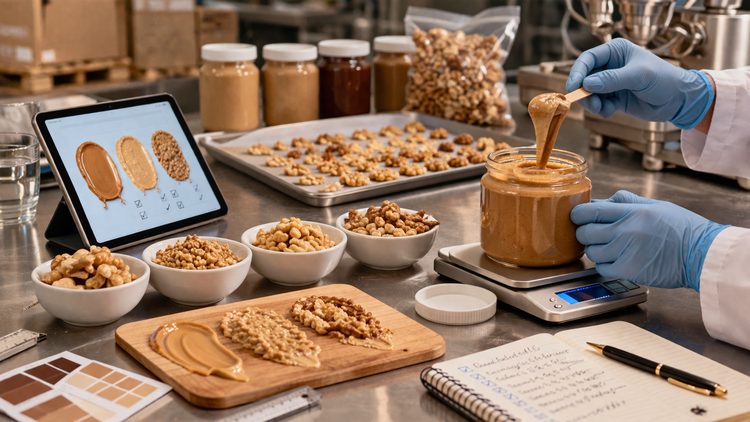
Walnut butter programs are often harder to brief than kernel or piece programs because buyers are no longer purchasing only a raw agricultural ingredient. They are purchasing a processed nut system whose value depends on grind profile, texture behavior, oil expression, roast character, ingredient composition, packaging choice and how the product will actually move through the customer’s line. In other words, walnut butter buying is rarely just about price per kilogram. The stronger commercial result usually comes from aligning the intended application, texture target, process assumptions and shipment route before the quotation stage.
Atlas uses pages like this to help buyers shift from general interest to a specification-minded inquiry. A request for “walnut butter” can mean very different things depending on whether the customer needs a spoonable retail-style spread, an industrial filling ingredient, a pumpable inclusion base, a high-fat confectionery component, a bakery swirl ingredient or a private label finished product. Good briefing reduces avoidable back-and-forth and makes California partner options easier to compare on a like-for-like basis.
Why walnut butter requires a more detailed brief than kernels or pieces
When buyers source walnut halves, pieces or meal, they are usually evaluating visible grade, cut, roast treatment, pack size and shipment timing. Walnut butter adds another layer because it is a processed texture ingredient. The brief must account for what the butter should feel like, how it should behave over time and whether it needs to remain stable in a jar, tank, depositor, mixer, pail or lined drum.
Two walnut butter products can both look commercially acceptable at first glance and still perform very differently in use. One may be smooth and highly spreadable, another thicker and more paste-like. One may release free oil quickly, another may hold structure better. One may work well in bakery fillings, while another may be intended for consumer retail jars. The buying conversation should therefore begin with application and function, not with product name alone.
How this topic shows up in real buying decisions
In practice, buyers brief walnut butter programs around a small set of recurring questions. What grind is needed? Is the texture smooth, medium or intentionally rustic? Does the butter need to be spoonable, spreadable, pumpable or depositable? Is the input roasted or raw? Is the system 100 percent walnut, or does the customer want salt, sweetener, stabilizer, oil adjustment or another formulation note? Will the product be repacked, blended into a secondary product or sold as a finished retail item?
These questions are important because walnut butter sits at the intersection of ingredient sourcing and process design. Some customers are buying walnut butter as a finished product. Others are really buying a semi-finished industrial component that will be blended into sauces, fillings, confectionery centers, bakery systems, nutrition formats or foodservice recipes. Those are different commercial routes and should not be quoted as though they were identical.
For walnut buyers, the usable product menu can extend well beyond in-shell or kernel formats and include raw walnuts, pasteurized walnuts, dry roasted walnuts, meal, fine flour, walnut paste, walnut butter and walnut oil. Which route makes sense depends on the end use, whether the customer is manufacturing further, packing for retail, planning export distribution or requesting private label finished product.
Briefing shortcut: a walnut butter inquiry becomes more actionable when the buyer describes what the product should do rather than only what it should be called. “Smooth walnut butter for depositable confectionery filling” is a far better brief than simply “quote walnut butter.”
Application first: what is the walnut butter meant to do?
The strongest walnut butter briefs begin with end use. Atlas usually asks buyers to define the practical job of the butter before discussing commercial structure. Typical application paths include:
- Retail spread: usually requires consumer-friendly mouthfeel, good spoonability, consistent appearance and appropriate pack presentation.
- Bakery filling or swirl: may require a thicker or more controlled body so the ingredient holds position in dough systems or layered products.
- Confectionery center: may prioritize smoothness, roast flavor, fine grind and compatibility with chocolate, sugar or fat-based systems.
- Sauce or filling base: often needs blendability, predictable texture and manageable oil behavior.
- Foodservice or back-of-house use: may value practicality, pail or bulk packing and repeatable handling more than retail-style finish.
- Ingredient for blending: often requires a neutral or controlled foundation that will be combined with sweeteners, flavors or other nut ingredients.
- Private label finished product: usually adds packaging, label, presentation and market-fit requirements to the technical brief.
When the application is known, the rest of the program becomes easier to structure. Texture, roast style, pack format and commercial staging all begin to follow from that first decision.
Choose the input route: raw, pasteurized or roasted walnut basis
Walnut butter character is strongly influenced by the incoming walnut ingredient. Buyers should indicate whether the butter is expected to be produced from raw kernels, pasteurized material or roasted walnuts. This is not only a flavor question. It also affects color, aroma intensity, perceived richness, processing behavior and the commercial interpretation of the finished ingredient.
Raw walnut basis
A raw basis may be relevant where the buyer wants a milder flavor or intends further processing in-house. It may also matter when a program is built around downstream blending and the butter is not expected to deliver a strongly roasted sensory note on its own.
Pasteurized basis
Pasteurized input may be useful where the buyer wants treated material but still wants more control over final flavor positioning. Depending on the application, this route can support certain industrial quality and process assumptions without pushing the product all the way into a clearly roasted sensory profile.
Dry roasted basis
Roasted walnut butter is often the most commercially intuitive route for retail spreads, bakery fillings and confectionery applications because it typically provides a more developed nut aroma and a more familiar flavor signature. Even here, the brief should go further than “roasted.” Buyers may need to indicate whether they want a lighter roast, balanced roast or more developed profile, particularly if the butter will interact with chocolate, sweeteners or savory inclusions.
When buyers fail to state the desired input route, they often end up comparing products that are not directly comparable in flavor, color or use-case fit. That makes quotation less useful and trials more difficult to interpret.
Grind profile: smooth, semi-smooth or textured?
Grind profile is one of the most important elements in a walnut butter brief. It affects mouthfeel, flow behavior, consumer perception, depositor performance and how the butter integrates into secondary products. A coarse or textured grind may support artisanal positioning or sensory identity in some retail programs, while a fine and highly refined grind may be necessary for confectionery centers, premium fillings or industrial blending systems.
Commercially, buyers usually do better when they define grind in practical language rather than abstract language. Useful briefing phrases might include:
- Smooth: intended for refined mouthfeel, spread applications or fine filling systems.
- Semi-smooth: some walnut character retained, often useful where natural identity matters but easy handling is still needed.
- Textured: visible particulate or rustic body, relevant to selected retail or specialty foodservice programs.
- Pumpable: indicates that flow under production conditions matters more than spoonable consumer-style structure.
- Depositable: relevant when the butter is portioned into bakery, confectionery or snack applications using controlled equipment.
Atlas generally recommends tying the grind request to a real line condition. A spreadable retail butter, a bakery swirl ingredient and a confectionery center base are unlikely to need the exact same finish, even if all three are technically walnut butter.
Texture and viscosity expectations should be part of the brief
Texture in nut butter buying is not only a sensory issue. It is an operational one. The butter may need to pour, scoop, pump, blend, deposit or hold position. A customer that omits these practical details may receive a product that is compositionally correct but operationally inconvenient.
Walnut butter texture can be influenced by grind fineness, oil release, roast input, temperature and formulation choices. Buyers therefore benefit from describing the intended handling condition. For example, will the butter be used at ambient temperature, warmed during production, mixed with syrups, or diluted into another matrix? Is the target a dense paste, a creamy spread, or a workable intermediate that will be standardized internally?
Useful briefing points may include:
- whether the butter should hold shape in a filled product
- whether it should spread easily in retail use
- whether it needs to move through a pump or depositor
- whether some natural oil separation is acceptable
- whether the customer intends to rework or homogenize before use
These points turn the discussion from a generic product request into a process-aware buying conversation.
Oil separation, free oil and natural behavior
Walnut butter buyers should usually address oil behavior explicitly. Nut butters often show natural oil movement over time, especially when the system is positioned as a simple ingredient rather than a heavily structured retail spread. This is not automatically a defect, but it does need to be commercially understood.
A buyer should decide whether the program accepts a more natural oil-separated profile, expects a tighter homogeneous appearance, or plans to re-mix the product before use. This distinction matters because a bakery ingredient packed in pails for internal use may tolerate a different oil behavior than a finished retail product on shelf. Similarly, an industrial customer blending the butter into a secondary matrix may not need the same level of visual stability as a consumer jar program.
For export programs, this conversation becomes even more important because transit time and storage conditions can influence how the product presents on arrival. The point is not that one route is universally right. The point is that the expected oil behavior should be acknowledged in the brief.
Commercial note: buyers often get better trial results when they state whether they are seeking a natural-style butter, a more controlled retail presentation, or an intermediate ingredient that will be mixed further after receipt.
Ingredient composition: pure walnut or built formula?
Another key brief question is whether the customer wants a single-ingredient walnut butter or a more structured formula. Some buyers want a straightforward walnut-only product. Others want a system that includes salt, sweetener, additional oil, stabilizing support or another ingredient layer aligned with the intended application.
This distinction has direct commercial implications. A simple walnut-only butter may be the right route for ingredient buyers, clean-label programs or industrial customers that want maximum downstream control. A more built formula may make sense for retail spreads, foodservice applications or private label projects where the finished eating experience matters more than ingredient simplicity alone.
Atlas usually advises buyers to define what belongs inside the butter and what will be handled later. That separation helps avoid quoting the wrong product type. It also keeps formulation conversations grounded in the actual route to market.
Color and flavor expectations in walnut butter
Walnut butter specification is not only about grind. Color and flavor expectations also matter, especially in premium retail, confectionery and bakery filling programs. A lighter roast may preserve a milder and more natural walnut profile, while a more developed roast may create deeper aroma and darker appearance. The correct route depends on the surrounding product.
For example, a confectionery center may want a roasted note that stands up inside a chocolate system. A bakery application may prefer a balanced roast that contributes walnut character without dominating. A clean-label retail butter may want a more straightforward nut flavor with visible authenticity, while a private label product aimed at a broader market may prefer a more rounded, familiar sensory profile.
In commercial discussion, it helps to describe flavor in relation to the end product. Phrases like “mild walnut profile,” “balanced roasted note,” or “more developed nut flavor for confectionery use” are more useful than subjective terms like “good taste.”
Pack style and logistics for walnut butter programs
Packaging changes the commercial logic of walnut butter more than many buyers expect. A product intended for industrial use may fit lined pails, pails with lids, bulk containers or drums depending on volume and handling route. Foodservice or wholesale distribution may favor manageable pack sizes that operators can open, stir and portion easily. Retail-ready and private label programs obviously introduce finished consumer packaging questions as well.
Buyers should explain not only the pack size they want, but also how the product will be received and used. Will the butter be used quickly after opening? Does the receiving facility have the handling setup for larger packs? Is the program export-oriented and therefore more sensitive to pallet efficiency and transit presentation? Will the product be repacked in the destination market? These questions influence packaging recommendations and quote comparability.
When relevant, the brief should also mention whether the program is industrial bulk, foodservice, retail-ready, private label or export-oriented. That one clarification often changes packaging, documentation and timing assumptions.
Domestic versus export walnut butter programs
The same walnut butter spec can behave differently as a commercial project depending on whether it is intended for the U.S. market or export distribution. Domestic programs may prioritize plant fit, local distribution, replenishment cadence and practical receiving conditions. Export programs usually need a more explicit conversation around destination market, label format, documentation, transit window, shelf-life planning and how the product should present after international shipping.
For export buyers, timing and product behavior should be considered together. A natural-style walnut butter intended for re-mixing in an industrial plant may be perfectly acceptable in one market context. A retail jar program crossing long distances may need tighter agreement on presentation, pack structure and commercial expectations. The earlier the destination market is named, the easier it is to structure the brief around real logistics rather than assumptions.
Volume rhythm matters as much as nominal annual demand
Atlas encourages buyers to describe volume in operational stages rather than only as a broad annual estimate. Walnut butter programs often move through a sequence of trial quantity, validation run, launch volume and repeat replenishment. Those stages matter because the packaging choice, quotation method and planning assumptions may be different at each point.
A small development run may justify flexibility and quick sampling. A launch program may require firmer packing and timing coordination. A repeat account may benefit from structured replenishment planning and clearer documentation standards. Buyers do not need perfect long-term forecasts, but they should separate immediate needs from target steady-state demand wherever possible.
What Atlas would ask before quoting a walnut butter program
Atlas encourages buyers to define intended use, pack style, destination, timeline and quality expectations early. For walnut butter specifically, the most useful quote requests usually answer the following questions:
- What is the end use: retail spread, filling, bakery inclusion system, confectionery center, foodservice or ingredient base?
- Should the butter be based on raw, pasteurized or roasted walnuts?
- What grind is needed: smooth, semi-smooth, textured, pumpable or depositable?
- What texture behavior is expected in use?
- Is natural oil separation acceptable, or is tighter presentation required?
- Is the formula walnut-only, or should it include salt, sweetener or another design element?
- What pack style is needed: industrial bulk, pail, drum, retail-ready or private label format?
- What market is the program serving: U.S., EU, Middle East, Asia or another export route?
- What is the commercial stage: trial, pilot, launch or repeat replenishment?
- When is the target ship or production window?
Those inputs help reduce avoidable back-and-forth and improve comparability across California supply options.
How a better brief improves commercial outcomes
A good walnut butter brief does more than make a quotation easier. It helps the buyer avoid expensive mismatches later. If the grind is too coarse, the product may not work in a confectionery center. If the butter is too fluid, it may not hold in a bakery application. If the oil behavior is misunderstood, the receiving team may reject a product that was actually commercially suitable for a natural-style ingredient program. If the pack format is wrong, handling costs and operational inconvenience rise even when the product itself is acceptable.
Better briefing therefore protects both technical fit and commercial efficiency. It also shortens the path from research to trial and from trial to repeat business.
Commercial planning points
From a trading standpoint, the best walnut butter programs are built around repeatability. That means clear documentation, agreed packaging, sensible shipment cadence and a commercial structure that supports continuity rather than one-off emergency buying. It also means distinguishing between a product development conversation and a supply conversation. A development-stage brief may prioritize flexibility, sampling and spec refinement. A supply-stage brief should increasingly define the exact product, pack, market and timing route required for steady execution.
Typical use cases for walnut products on this website include bakery, confectionery, sauces and fillings, snacks and granola. Walnut butter inquiries usually become stronger when the product brief is clearly matched to one of those concrete end uses rather than written as a broad idea without operational context.
Buyer planning note
Atlas Global Trading Co. uses topics like this to move conversations from broad interest to a specification-minded inquiry. If you are evaluating a walnut butter program, share the intended application, grind style, roast input, pack format, estimated volume, destination market and timing using the floating contact form so the next step can be grounded in a real commercial need.
What a quote-ready walnut butter brief usually includes
- Target end use and route to market
- Raw, pasteurized or roasted walnut basis
- Smooth, semi-smooth or textured grind preference
- Spreadable, pumpable or depositable texture target
- Expectations around oil separation or homogeneous appearance
- Pure walnut or formulated composition
- Industrial bulk, pail, drum, retail-ready or private label pack format
- Destination market and shipment route
- Trial, launch or repeat monthly volume
- Target ship window and commercial timing
Need help sourcing around this walnut butter topic?
Use the contact form to share your product, packaging, destination and timing requirements for a practical quotation.
- State the walnut butter grind and intended use
- Add target monthly, trial or launch volume
- Include destination market and target timing
Frequently Asked Questions
What should a buyer define before requesting a walnut butter quote?
A strong walnut butter brief should define the intended application, grind style, texture target, ingredient composition, roast input, packaging format, destination market, estimated volume and timeline. Those details reduce ambiguity and make quotations more commercially useful.
Why does grind profile matter in a walnut butter program?
Grind profile affects mouthfeel, spreadability, pumpability, depositor behavior, oil release and final product consistency. A program meant for spreads, fillings, bakery use or foodservice may each require a different finish.
Can the same walnut butter brief work for both U.S. and export programs?
The core specification logic is similar, but export programs often require more detail on pack format, labeling, documentation, shipment timing and shelf-life planning relative to transit conditions.