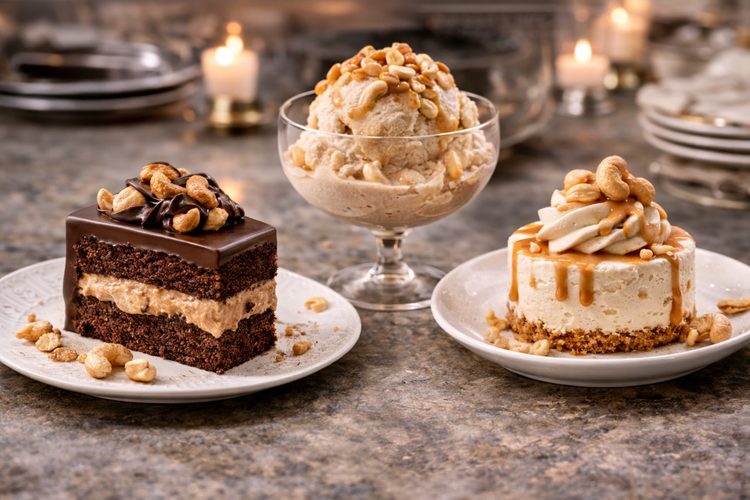
Premium dessert positioning with cashews is not only about adding an upscale ingredient to a recipe. In buyer dessert development, it is about deciding what role cashews play in the finished product and how that role supports commercial value. Cashews can add creaminess, create a softer luxury-style mouthfeel, deliver visible inclusions, support clean or plant-based positioning, contribute a mild nut profile and help frame a dessert as more refined than a standard commodity alternative. The strongest outcome usually comes when the dessert concept, product format, processing route and pack style are defined together before sourcing begins.
That is why dessert buyers rarely evaluate cashews only on nominal price. The more useful sourcing question is what the ingredient needs to do on line and in the finished dessert. Should it build a rich base in frozen desserts, add visual elegance to plated sweets, create contrast in bakery layers, support indulgent spreadability in fillings, or give a premium roasted note in confectionery and café desserts? Once that function is clear, the appropriate format, roast style, texture and packaging route become easier to define.
Why cashews work in premium dessert positioning
Cashews occupy a useful space in dessert development because their flavor is generally mild, rounded and versatile. They can support sweet applications without dominating the formula, which makes them effective in layered or blended systems where balance matters. Unlike stronger nut profiles that can become the main flavor identity of the dessert, cashews often act as an indulgent background note that supports vanilla, chocolate, coffee, caramel, fruit or spice without creating conflict. That flexibility is commercially important for brands and foodservice operators looking to extend a dessert range across multiple SKUs.
Cashews also help create premium perception through texture. In whole, diced or granulated form, they can add visible value, bite and inclusion contrast. In butter, paste or flour formats, they can support smoother, richer and more luxurious textures. For premium dessert positioning, this matters because consumers and professional buyers alike often associate creamier mouthfeel, elegant inclusion appearance and cleaner finish with higher-quality dessert experiences.
Premium dessert buyer note: premium positioning is usually not created by ingredient name alone. It comes from how the ingredient affects appearance, texture, flavor layering, serving experience and repeatability at scale.
How this topic shows up in real buying decisions
In practice, dessert buyers compare raw, pasteurized, dry roasted, oil roasted and processed formats such as diced cuts, meal, flour, butter and oil. The right choice depends on the balance between appearance, bite, creaminess, blendability, oil release, label ambitions and total delivered cost. A dessert concept that needs visible indulgence may favor roasted whole or diced cashews. A product that needs smooth body may move toward cashew butter or paste. A premium bakery item with subtle nut richness may use flour or meal instead of visible inclusion pieces.
For cashews buyers, the usable product menu usually includes raw cashews, pasteurized cashews, dry roasted cashews, oil roasted cashews, diced cashews, cashew meal, cashew flour and cashew butter. Which of those makes sense depends on the end use, whether the customer is manufacturing further, serving in foodservice, packing for retail or planning export distribution. A plated dessert operation, gelato producer, industrial bakery and retail frozen dessert brand may all use cashews, but each requires a different specification route.
Premium positioning is tied to format selection
Whole cashews for visual premium cues
Whole cashews are typically chosen when the dessert needs immediate visible value. This can apply to pâtisserie toppings, tart decoration, premium cookies, snack desserts, bakery crowns and plated applications where the ingredient has to be seen before it is tasted. The commercial advantage of whole kernels is their ability to create a more generous, premium appearance, but buyers should also consider breakage tolerance, roast color consistency, placement method and cost per serving.
Diced and pieces for controlled indulgence
Diced cashews help create a more controlled premium signal. They can be distributed through cookies, brownies, cakes, dessert bars, frozen dessert inclusions and parfait-style layers while still contributing texture and visible nut content. Diced formats often give better portioning efficiency and more even distribution than whole kernels. For commercial dessert production, that means better cost control and more consistent eating experience from unit to unit.
Cashew butter and paste for luxurious mouthfeel
Cashew butter is particularly relevant in premium dessert positioning because it allows the ingredient to contribute richness without necessarily becoming a visible inclusion. It can support smooth dessert bases, fillings, swirls, mousses, creams, frozen desserts, plant-based desserts and confectionery interiors. In these applications, the premium signal comes from mouthfeel, not only appearance. Buyers should therefore think in terms of viscosity, grind profile, roast expression, oil behavior and pack format rather than simply asking for a generic cashew butter.
Cashew flour and meal for subtle sophistication
Cashew flour and meal work when a dessert needs integrated nut richness, a softer crumb profile or a more premium ingredient story without visible pieces. These formats are useful in gluten-free bakery, premium sponge systems, tart bases, tea cakes, macarons, friands, cookies and certain frozen or plant-based dessert bases. Commercially, flour formats can help align indulgence and texture while maintaining a refined appearance.
Application-by-application premium dessert logic
Frozen desserts and gelato-style applications
Cashews can support premium frozen desserts through either texture contrast or creamy base development. Diced roasted pieces can add crunch and visible premium inclusion value. Cashew butter or paste can support richness, smoothness and nut depth in swirl systems, ripple components or dairy-free frozen desserts. Buyers should decide whether the cashew ingredient is acting as a feature inclusion, a flavor layer or a structural part of the base. That distinction changes the correct format and pricing logic.
For frozen systems, premium positioning also depends on how the inclusion behaves at cold temperature. A piece that looks attractive at fill may become too hard or too subtle once frozen. A butter that tastes rich at ambient conditions may need different handling to perform well in a cold matrix. Those practical points matter when comparing ingredient routes for upscale frozen dessert lines.
Bakery desserts and pâtisserie
In bakery desserts, cashews are often used to build a premium look and a premium bite. Whole kernels can crown cakes or pastry items. Diced pieces can be folded into cookies, blondies, bars and layered desserts. Cashew flour can contribute richness to crumb systems and help position a finished product as more refined. Buyers should think about bake stability, roast carry-through, oil release and visual consistency after baking.
A premium bakery line often depends on repeatable presentation. That means cut size consistency, roast color, inclusion distribution and pack condition can all influence whether the finished dessert reads as premium or simply expensive. A well-specified cashew format helps avoid that gap.
Dessert fillings, praline-style centers and layered sweets
Cashews can support a premium dessert line through fillings that feel softer, smoother and more elegant than standard fat-sugar systems. Cashew butter, paste and fine meal formats are especially relevant here. They can help create luxurious interiors in bars, bonbons, sandwich cookies, wafers, rolls and laminated dessert applications. The premium positioning comes from smoothness, round nut character and melt profile rather than visible topping alone.
In these formats, buyers should specify whether they need body, flow, spreadability or blendability. A filling for a shelf-stable packaged dessert may require a different cashew route than a refrigerated dessert or a foodservice application prepared close to serving time.
Plant-based premium desserts
Cashews are highly useful in premium plant-based desserts because they can help create creamier textures and more indulgent eating quality than some leaner plant systems. Cashew butter, paste and fine meal can support plant-based cheesecakes, mousses, frozen desserts, puddings, dessert sauces and spoonable cups. In these products, the premium signal often comes from reduced harshness, fuller body and a more rounded finish.
From a sourcing standpoint, plant-based dessert buyers often care about both formulation behavior and marketing language. The ingredient has to perform technically while still supporting the intended consumer message. That is why the specification should cover both process needs and market positioning.
Foodservice and plated desserts
Foodservice operators, premium cafés and dessert chains often use cashews to create visual distinction or signature texture. Whole or chopped roasted kernels may top plated desserts, while cashew butter may appear in sauces, creams or signature dessert spreads. Here the commercial logic includes not only cost but also operational simplicity. The right cashew format should support speed of service, portion control, consistent presentation and manageable storage in a real kitchen or pastry environment.
What makes a dessert feel premium in commercial terms
Premium positioning is not the same as using expensive ingredients without structure. In dessert programs, premium usually comes from a combination of sensory and commercial signals. Cashews can support several of those signals at once:
- Texture: creamier mouthfeel, cleaner finish or more elegant crunch.
- Appearance: visible inclusions, attractive roast color and upscale garnish value.
- Flavor: a mild, rounded nut profile that layers well with sweet dessert profiles.
- Menu language: cashew-based, roasted cashew, cashew cream or cashew praline-style positioning.
- Format versatility: the same ingredient family can support multiple premium SKUs.
- Channel fit: retail, foodservice, plated dessert, frozen dessert or private label programs.
For buyers, the useful question is which of these premium signals matters most. Some desserts need visible impact first. Others need texture first. Others rely on plant-based or better-for-you framing with indulgent sensory delivery. The right cashew route depends on which premium cue is carrying the commercial value.
What Atlas would ask before quoting
For dessert-focused cashew projects, Atlas would usually recommend translating the idea into a quote request with specific commercial and technical points. That makes it easier to discuss realistic California partner options instead of a generic price-only inquiry.
- What exact dessert category is involved: bakery dessert, frozen dessert, plated dessert, confectionery, plant-based dessert or dessert filling?
- What job should the cashew ingredient do: add crunch, create creamy body, build a premium visual, support a label story or carry flavor?
- Which format is most likely required: whole, pieces, diced, meal, flour, butter, paste or oil?
- Does the product need raw, pasteurized, dry roasted or oil roasted material?
- Is the program industrial bulk, foodservice, retail-ready, private label or export-oriented?
- What is the intended pack style and handling method on site?
- Is the project at trial quantity, validation run, launch volume or repeat replenishment stage?
- What destination market, shelf-life expectations and timing assumptions should be planned from the start?
Typical use cases for cashews on this website include snacks, bakery, confectionery, plant-based dairy and spreads. In dessert programs, the product brief should always connect the chosen cashew format to one of those concrete uses rather than treating “premium” as a standalone specification.
Commercial planning points
Commercially, dessert projects often develop in stages: concept sample, validation run, launch volume and repeat replenishment. Atlas uses that logic to guide pack and shipment planning, especially when retail packaging, export retail or private label is part of the conversation. The earlier the buyer defines whether the cashew ingredient is for R&D, menu development, seasonal launch or ongoing supply, the more realistic the quote process becomes.
When relevant, the brief should also mention whether the program is industrial bulk, foodservice, retail-ready, private label or export-oriented. That single clarification often changes packaging, documentation and timing assumptions. A premium pâtisserie chain may prioritize small workable packs and appearance consistency. A frozen dessert plant may prioritize inclusion uniformity, industrial pack efficiency and replenishment rhythm. A private-label dessert line may focus more heavily on format cost, label alignment and long-run supply continuity.
Buyers should also think in terms of total delivered value, not just ingredient line price. A slightly more expensive diced format that gives better inclusion distribution or less process waste may be commercially stronger than a cheaper, less consistent option. A cashew butter with the right grind profile may reduce reformulation time and create a better finished dessert experience. Premium dessert positioning only works when the ingredient route supports repeatability, not just launch-day storytelling.
How premium dessert sourcing decisions usually evolve
In many real programs, the first question is creative: what dessert story is the brand, chef or manufacturer trying to tell? The second question is technical: how will cashews behave in the process? The third question is commercial: can the chosen route scale cleanly? Those three questions should stay connected. If the ingredient makes the dessert feel premium but complicates processing or pack economics, the buyer may need a different format. If the ingredient is easy to buy but does not create a meaningful premium cue, the product may lose distinctiveness.
That is why the best dessert programs move beyond general interest quickly. They define the dessert type, the desired premium signal, the needed cashew format, the pack route and the projected order rhythm. Once those are clear, quotations become easier to compare and the sourcing discussion becomes much more practical.
Buyer planning note
Atlas Global Trading Co. uses topics like this to move conversations from broad interest to a specification-minded inquiry. If you are evaluating cashews for premium dessert positioning, share the target format, dessert application, pack style, estimated volume and destination using the floating contact form so the next step can be grounded in a real commercial need. The stronger discussion is not simply whether cashews can be used in dessert. It is how the right cashew format can support a repeatable premium dessert program in the channel you actually serve.
Need help sourcing cashews for a premium dessert line?
Use the contact form to turn this research topic into a practical quote request built around dessert type, format, pack style and commercial timing.
- State the exact cashew format and dessert use
- Add target monthly or trial volume
- Include destination market and target timing
Frequently Asked Questions
How do cashews help position a dessert line as premium?
Cashews can support premium positioning through creamy mouthfeel, elegant nut flavor, visual appeal, indulgent texture and flexible use across inclusions, butters, pastes and flour-based applications. The premium effect depends on choosing the right format for the finished dessert and service model.
Which cashew formats are most useful in premium desserts?
Common premium dessert formats include whole or pieces for visual topping, roasted diced cuts for crunch, cashew butter or paste for smooth richness, and cashew flour or meal for bakery and frozen dessert systems. The best option depends on whether the dessert needs texture, creaminess, flavor carry or visual impact.
What should buyers include in a quote request for dessert-focused cashew supply?
A strong quote request should include dessert type, target cashew format, roast preference, texture goal, pack style, channel, estimated volume, destination market and required delivery timing. These details make the quote more practical and commercially comparable.