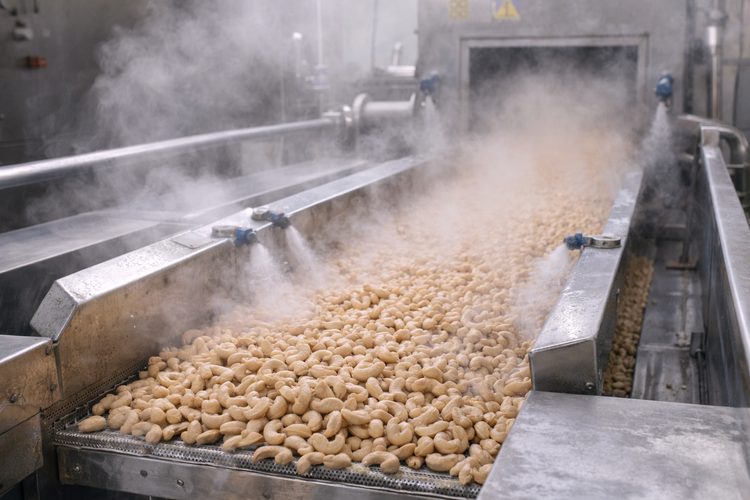
Cashew pasteurization matters because industrial nut buying is rarely only about nominal price or broad product naming. The stronger commercial outcome usually comes from aligning product form, process route, food-safety expectations, packaging and shipment timing before the order is placed. In other words, pasteurization is not just a technical line on a specification sheet. It is often part of the wider approval logic that determines whether a product is suitable for a buyer’s application, facility standards, customer requirements and channel strategy.
For many buyers, the first mistake is treating pasteurization as an automatic yes-or-no requirement without connecting it to the real end use. A bakery manufacturer buying cashew pieces for further baking may ask different questions from a plant-based producer using cashew butter in a creamy formulation. A retail repacker may have different approval needs from an industrial customer buying bulk kernels for in-house roasting. Pasteurization matters, but it matters in context. The practical task is to understand when it affects the sourcing route, what commercial implications it carries and what questions should be asked before quotation.
Why pasteurization becomes a sourcing question
In cashew supply, pasteurization usually enters the discussion when the buyer has a defined food-safety requirement, a customer approval standard or a process preference that makes treated product more suitable than untreated product. That requirement may come from internal QA policy, a branded retail customer, a private-label program, a foodservice chain, an export customer or a processing environment where the buyer wants a different risk-management profile at the ingredient stage.
Commercially, this matters because a pasteurized cashew route may not be directly comparable with an untreated one. The process step can influence documentation, supplier qualification, lead-time assumptions, product description, pack route and in some cases flavor, appearance or handling expectations. Even when the product family sounds similar, the quote logic may be different. That is why experienced buyers usually define the real application and approval context before asking for pricing.
Buyer shortcut: do not ask only for “pasteurized cashews.” Ask for the exact cashew format, the intended end use, the expected process route, the pack style and the documents needed to support approval.
When pasteurization tends to matter most
When the customer or channel requires it
Some buyers are not making a discretionary choice. They are responding to a downstream requirement. Retail, private label, foodservice and certain industrial customers may have supplier-approval standards that make pasteurized input the preferred or required route for a specific program. In these cases, the commercial question is not whether pasteurization sounds valuable in general. It is whether the offered product and supporting documents fit the customer’s actual approval framework.
When the buyer wants a defined process step before further handling
Some manufacturers prefer to source treated material because it fits their internal process design better. This can apply when cashews are being repacked, used as inclusions, converted to butter or paste, blended into plant-based systems or incorporated into products where the buyer wants tighter upstream control before the next manufacturing stage. Here, pasteurization becomes part of process planning rather than a stand-alone marketing point.
When channel risk and brand exposure are high
The higher the visibility of the finished product, the more carefully many customers review upstream process claims. Premium branded goods, export retail lines, private-label programs and broad-distribution products often involve more structured approval and documentation. In those settings, pasteurization may matter because it is tied to the buyer’s risk posture, quality narrative and supplier-review process.
When the cashew format is moving into sensitive downstream uses
The practical importance of pasteurization also changes by format and application. Whole kernels used for further roasting are not discussed in exactly the same way as diced pieces, flour or cashew butter. A buyer sourcing a further-processed ingredient may ask more detailed route questions because the product will pass through additional handling, blending or packing steps before reaching the final market.
When pasteurization may be discussed differently
Not every cashew program starts with pasteurization as the central buying question. In some routes, the buyer is focused more on roasting, conversion, inclusion performance, texture, cost structure, pack efficiency or export documentation. That does not make pasteurization irrelevant. It simply means it should be evaluated as part of the total process route, not assumed to be the main differentiator in every case.
This is one reason broad comparisons between suppliers can be misleading. One quotation may describe raw kernels, another pasteurized kernels, another roasted pieces, and another butter produced from treated input. These are not always like-for-like offers even when the product category appears similar. A better commercial comparison starts with the real application and then asks whether pasteurization is required, preferred or neutral for that use.
How this topic shows up in real buying decisions
For cashews, the quote should reflect the real format and route. Whole or kernel material is different from diced, meal, extra-fine flour, butter or oil. The commercial logic also changes when the material is raw, pasteurized, dry roasted or oil roasted. A customer sourcing cashew butter for plant-based dairy may need a different conversation than a bakery buyer sourcing diced inclusions or a retail packer sourcing branded snack kernels.
For cashew buyers, the usable product menu often includes raw cashews, pasteurized cashews, dry roasted cashews, oil roasted cashews, diced cashews, meal, flour and butter. Which of those makes sense depends on the end use, whether the customer is manufacturing further, packing for retail, serving foodservice or planning export distribution. Pasteurization becomes meaningful when it is mapped to one of those real routes instead of discussed in abstraction.
What buyers should ask about the pasteurization route
1) What exact product format is being pasteurized?
This should be clarified immediately. Are the cashews whole kernels, pieces, diced cuts, flour, meal or butter? Different forms create different processing, handling and commercial implications. A buyer should never assume that one answer covers all formats equally.
2) At what stage does pasteurization occur in the product route?
This is a practical sourcing question. Buyers often want to understand whether pasteurization is applied before further conversion, before packing or within a broader processing sequence. The answer can shape expectations around flavor, texture, paperwork and comparability between offers.
3) How does the route affect flavor, appearance and handling?
Pasteurization discussions are usually driven by food-safety and approval concerns, but buyers should still ask how the route fits the product’s intended sensory and functional use. The product still has to work in application. If the customer cares about bite, visual presentation, creaminess, color or further process behavior, those points should stay in the conversation.
4) What documents support the treatment and release?
For buyer buyers, this is often as important as the process claim itself. The useful question is what documents, records or commercial paperwork accompany the product so that internal QA, purchasing and customer-approval teams can review the offer efficiently. This is especially important in branded, private-label and export-oriented routes.
5) How is the product packed, identified and shipped after treatment?
Pasteurization does not sit outside the packaging and logistics discussion. Buyers should ask how the product is packed, how lots are identified and how the route supports the intended downstream use. Industrial bulk, foodservice, retail-ready, private label and export-oriented programs can all imply different packaging and document expectations.
6) What is the expected order rhythm and lead-time reality?
Pasteurized programs are often stronger when they are planned rather than bought reactively. Buyers should clarify whether the request is for trial quantity, validation run, launch volume or repeat replenishment. That helps prevent a technically correct request from becoming a commercially inefficient one.
Format-by-format considerations
Whole and kernel formats
For whole kernels and larger grades, pasteurization is often discussed together with pack integrity, further processing plans and final customer route. Buyers may care about whether the product will be roasted later, used as a visible inclusion or repacked into consumer or foodservice formats. The more visible the finished application, the more tightly specification and documentation usually need to align.
Diced and cut formats
Diced and cut formats are often used in bakery, confectionery, snack systems and dessert applications. Because these products go through additional cutting, sizing or transfer logic, buyers may ask more detailed questions about where pasteurization sits in relation to the overall route and how the resulting product is packed and qualified.
Meal and flour formats
Meal and flour-style products are often discussed in applications where blendability, integrated texture and further process behavior matter. Buyers in bakery, plant-based or formulation-led categories may want clearer answers on route, treatment status, packaging and document support because the ingredient is entering a more technical formulation environment.
Cashew butter and paste
For butter and paste, pasteurization is typically connected to the wider conversion route. Buyers often ask not only whether treated material is involved, but also how the final butter or paste fits the intended application, texture expectations, pack route and approval process. In these cases, the food-safety conversation and the formulation conversation need to stay linked.
What Atlas would ask before quoting
Atlas encourages buyers to define intended use, pack style, destination, timeline and quality expectations early. For a pasteurization-related inquiry, Atlas would also encourage buyers to state why the pasteurization route matters for their program. That makes the quotation process more precise and reduces avoidable back-and-forth.
Typical questions before quotation may include:
- What exact cashew format is required: whole, pieces, diced, meal, flour, butter or another processed form?
- What is the intended application: snacks, bakery, confectionery, plant-based dairy, spreads or foodservice?
- Is pasteurization a customer requirement, an internal QA preference or part of the buyer’s normal sourcing standard?
- Will the cashews be further processed, repacked or used as a finished ingredient input?
- Is the program industrial bulk, foodservice, retail-ready, private label or export-oriented?
- What documents or commercial release information are needed to support approval?
- What is the commercial stage: trial quantity, validation run, launch volume or repeat replenishment?
- What destination market and timing expectations should be built into the sourcing plan?
Typical use cases for cashews on this website include snacks, bakery, confectionery, plant-based dairy and spreads. The product brief should always match one of those concrete end uses, because pasteurization only becomes commercially meaningful when it is tied to the actual route the ingredient will follow.
Commercial planning points
From a trading standpoint, the best programs are built around repeatability. That means clear documentation, agreed packaging, sensible shipment cadence and a commercial structure that supports continuity rather than one-off emergency buying. Pasteurization fits into that same logic. If the treatment route is part of the program requirement, it should be planned early enough that it supports approval, quotation and replenishment without creating unnecessary disruption later.
When relevant, the brief should also mention whether the program is industrial bulk, foodservice, retail-ready, private label or export-oriented. That single clarification often changes packaging, documentation and timing assumptions. A bulk processor may care most about route clarity and repeat supply. A retail-ready program may place more weight on documents, pack presentation and customer approval flow. An export program may make paperwork accuracy and shipment planning even more important.
Commercially, these projects often develop in stages: trial quantity, validation run, launch volume and repeat replenishment. Atlas uses that logic to guide pack and shipment planning. For pasteurized cashew supply, that staging matters because a small test order and a sustained monthly program are not the same commercial task. The more clearly the buyer defines the stage, the better the supply conversation becomes.
How buyers can make the conversation more practical
One of the strongest ways to improve a pasteurization discussion is to replace broad wording with process-ready language. Instead of asking simply for pasteurized cashews, a buyer can say they need pasteurized diced cashews for bakery inclusion, pasteurized kernels for repacking, or a cashew butter route suitable for a creamy plant-based application. That small change makes quotations easier to compare because the requested route is anchored in a real use case.
In commercial terms, this reduces wasted sampling, mismatched pricing and unclear approval paths. It also helps separate true requirements from default wording carried over from previous projects. Some buyers discover that pasteurization is a defined requirement. Others discover that what really matters is broader route clarity, documentation and application fit. Both outcomes are useful if identified early.
Buyer planning note
Atlas Global Trading Co. uses topics like this to move conversations from broad interest to a specification-minded inquiry. If you are evaluating cashew supply and pasteurization is part of the discussion, share the exact format, intended application, pack style, estimated volume, destination and approval context through the floating contact form so the next step can be grounded in a real commercial need. The practical goal is not only to ask whether pasteurization matters, but to determine when it matters for your actual cashew route and what information should support the buying decision.
Need help qualifying a pasteurized cashew supply route?
Use the contact form to turn this topic into a practical quote request with product format, application, pack style and approval needs.
- State the exact cashew format and end use
- Add target monthly or trial volume
- Include destination market and target timing
Frequently Asked Questions
When does pasteurization matter most in cashew sourcing?
Pasteurization matters most when the buyer’s application, customer approval process, channel requirements or internal food-safety expectations specifically call for it. It should be evaluated in relation to the real product route, not assumed as a universal requirement for every cashew program.
What should buyers ask when requesting pasteurized cashews?
Buyers should ask what exact product format is being pasteurized, where the pasteurization step sits in the process route, how it affects flavor and texture expectations, what documents support the treatment and how the product will be packed, identified and shipped.
Does pasteurization change the commercial discussion as well as the technical one?
Yes. Pasteurization can affect approval flow, documentation, timing, pack route, destination-market suitability, total delivered cost and comparability between suppliers. It is both a process question and a commercial planning question.