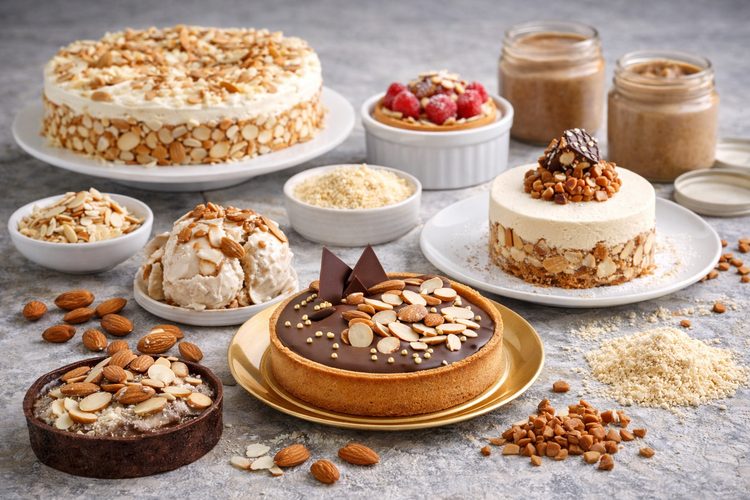
Premium dessert positioning with California almond ingredients is not simply about adding nuts to a sweet application. In commercial dessert development, almonds often function as a premium signal, a textural tool, a visual differentiator and a flavor-building ingredient at the same time. That is why the strongest sourcing outcome usually comes from aligning almond format, finished dessert style, packaging expectations and commercial timing before the order is placed.
In practice, dessert buyers do not usually ask only whether almonds can be used. They ask how almonds should appear, how they should eat, what story they help tell on pack and whether the format can perform consistently on line. A fine almond flour for a delicate bakery dessert is not the same commercial decision as sliced almonds for visible decoration, roasted diced kernels for layered inclusions or almond butter for premium creaminess. Each route changes both the technical logic and the delivered cost structure.
Why almonds matter in premium dessert positioning
California almond ingredients are frequently used in dessert systems because they help a product feel more crafted, more indulgent or more ingredient-led without necessarily requiring an extreme formulation change. In some concepts, almonds create a visible cue that supports a premium shelf message. In others, they provide a soft nut note, roasted warmth or richer mouthfeel that makes the dessert taste more finished and more upscale.
For buyer buyers, that means almonds are often doing several jobs at once. They may help a dessert communicate quality visually, improve bite contrast, support a roasted or creamy flavor profile, add a familiar premium ingredient to the label and provide a practical bridge between indulgence and recognizability. The correct almond format depends on which of those roles matters most.
Commercial takeaway: in premium desserts, almond selection should start with the role the ingredient must play in the finished product. Decoration, crunch, creaminess, body, flavor carry and premium visual identity are different quote requests, even when they all use California almonds.
How this topic shows up in real buying decisions
In practice, buyers usually compare raw, pasteurized, dry roasted, oil roasted and processed formats such as sliced almonds, slivered almonds, diced cuts, meal, extra fine flour, butter, praline-style bases and almond oil. The correct choice depends on the balance between appearance, bite, blendability, oil release, flavor intensity, label strategy and total delivered cost.
For almonds buyers, the usable product menu usually includes raw almonds, pasteurized almonds, dry roasted almonds, oil roasted almonds and derivative formats produced from those materials. Which option makes sense depends on whether the dessert is being manufactured further, decorated post-bake, filled, frozen, chilled, portion-packed for retail or positioned for export. Premium dessert sourcing therefore works best when the product brief reflects the true end use rather than a generic almond request.
Where almonds create premium value in desserts
Almond ingredients can support premium dessert positioning across several dessert types. In pastry and bakery desserts, they may add crisp topping texture, frangipane-style character, almond-rich crumb, decorative lift or premium particulate identity. In confectionery-adjacent desserts, they can support roasted depth, praline direction and more luxurious bite contrast. In frozen desserts, they may appear as inclusions, variegate support components, nut pastes or premium toppings. In chilled desserts, they can contribute creaminess, layered texture or indulgent garnish value.
They also work commercially in dessert bars, premium cookies, cakes, dessert cups, baklava-style products, tarts, entremets, plant-based desserts and giftable sweet lines. Each category uses almond ingredients differently, so buyers should define whether the almond is expected to be a hero inclusion, a hidden structure ingredient, a visual accent or a flavor system support.
Core almond formats used in premium desserts
Sliced almonds are commonly selected where the dessert needs visual elegance, top-note crunch and an immediately recognizable premium garnish. They are useful in pastries, cakes, tart finishes, enrobed desserts and premium bakery presentations where appearance matters at first glance.
Slivered almonds often provide stronger dimensionality and a slightly more dramatic visual effect. They can help signal hand-finished quality or a more artisanal direction, particularly when used on dessert surfaces or inside layered baked systems.
Diced or chopped almonds are relevant where the product needs inclusion visibility and bite contrast. They can fit cookies, bars, fillings, frozen dessert inclusions and premium snack-dessert hybrids.
Almond meal and flour are more appropriate when the goal is body, subtle nut character, structure support or a refined crumb. Extra fine flour may be especially useful in premium bakery applications where texture, consistency and controlled appearance matter.
Almond butter or paste-style systems are typically chosen when the dessert needs creamy nut richness, filling character, premium spreadability or a more concentrated almond flavor base.
Almond oil can be relevant in specialized applications where lubrication, aroma carry or texture adjustment matter more than visible almond solids.
Visual premium cues and merchandising logic
Premium dessert positioning often begins with what the customer sees before the first bite. Almonds are especially effective in this role because they are visually distinctive and widely associated with higher-quality confectionery and bakery applications. A clean top-finish of sliced almonds, well-distributed diced roasted inclusions or a visible almond filling layer can elevate perceived value even before the product is tasted.
This is why appearance specification is commercially important. A dessert program that depends on visible almonds should define how prominent the almond needs to be, how uniform the coverage should appear, whether breakage tolerance is tight or flexible and whether the almonds are meant to read as decorative, indulgent, artisanal or premium everyday. These are not only styling preferences. They directly influence which product format should be quoted.
Visual planning point: for premium desserts, almond appearance is part of the product promise. If the retail concept depends on visible nut quality, the inquiry should define that clearly rather than assuming all almond formats deliver the same shelf impression.
Texture architecture in premium dessert systems
Texture is often what separates an average dessert from a premium one. Almond ingredients can help create crisp contrast, layered crunch, soft nuttiness, creamy richness or a more complex eating sequence. A sliced almond topping gives a different bite from a roasted diced inclusion. An almond meal inside a cake system affects crumb and density differently from almond butter in a filling or cream base.
Buyers usually get better sourcing outcomes when they define the desired textural role early. Does the almond need to stay crisp after baking? Should it provide only a light crackle on top, or a more assertive crunch inside the dessert? Should it disappear into the crumb, or remain clearly visible in each bite? These questions affect cut size, roast preference, moisture interaction and the likely suitability of different almond forms.
For frozen or chilled desserts, texture planning matters even more because moisture migration and storage conditions can change how the almond is perceived over time. That does not eliminate the premium opportunity. It simply means the dessert brief should reflect the actual system the almond will live in.
Flavor layering: mild, buttery, roasted or praline-led
Flavor is another core reason dessert brands choose almonds. Some concepts need a mild, elegant nut note that supports vanilla, cream, cocoa or fruit without dominating. Others need a more developed roasted profile that signals indulgence and depth. Premium desserts often sit somewhere between those two ends, where the almond should be clearly present but integrated.
Raw or lightly treated almond ingredients may support softer bakery-style profiles and more delicate pastry directions. Dry roasted almonds can add warmth and greater aromatic impact. Almond butter and paste systems can drive a richer, fuller flavor expression and work well in fillings, creams, swirls and layered desserts. In more confectionery-driven applications, roasted almond components may be especially useful where the premium positioning depends on a praline-like or toasted dessert character.
From a sourcing standpoint, the flavor direction should be stated before quotation. A buyer asking for “almonds for premium dessert” may receive very different suggestions depending on whether the intended dessert is fruit-led, chocolate-led, dairy-led, frozen, crisp-textured or filling-based.
Label strategy and ingredient storytelling
Premium desserts are often sold partly through ingredient story. California almond ingredients can support that story by giving the dessert a more recognizable premium component on the label and in marketing language. For some brands, that matters as much as the functional role. The dessert may use almonds not only for texture or taste but also to reinforce a more upscale, ingredient-conscious or crafted brand message.
This is particularly relevant in retail-ready premium desserts, seasonal gift lines and export-facing products where ingredient recognition supports perceived value. If the almond is intended to be a visible hero ingredient, that should be reflected in the quote request. If it is a hidden structural element, the buyer may prioritize performance and cost-in-use differently.
How format choice affects process fit
Almond ingredients must also make sense operationally. A topping format used after baking behaves differently from an inclusion added before bake. A fine flour for cake or biscuit systems is handled differently from a butter or paste base for fillings. Roasted diced material may look excellent in a prototype but require different process considerations on a production line where cutting, depositing, topping or enrobing speed matters.
That is why buyers should define not only the dessert type but also the actual process route. Is the almond being mixed into batter, laminated into pastry, folded into cream, applied as top decoration, suspended in frozen dessert, blended into a paste or packed as a visible premium topping kit? The answer materially changes what Atlas or any supplier should quote.
Retail-ready premium desserts versus industrial dessert ingredients
There is an important commercial difference between sourcing almonds for further industrial dessert manufacturing and sourcing almonds for a finished premium retail dessert concept. In the first case, the focus may lean toward consistency, process fit and pack efficiency. In the second, the brand usually also cares deeply about visual elegance, premium cues, packaging compatibility, shelf impression and consumer-facing value communication.
For this reason, the same almond format may not be ideal across both routes. An industrial bakery may prioritize throughput and repeatability. A premium dessert retail line may accept a more selective visual requirement because appearance is part of the margin structure. Buyers usually benefit from naming the real route early: industrial bulk, foodservice, retail-ready, private label or export-oriented.
Packaging and premium presentation
Packaging is not separate from dessert positioning. In premium desserts, pack style can reinforce or weaken the value story the almond is supposed to support. A visible almond garnish may need protective packaging that preserves appearance. A chilled dessert with almond topping may require packaging that limits damage during transport. A premium bakery dessert for export may need a structure that maintains both presentation and shelf-life performance through longer logistics chains.
If the dessert program is retail-ready, the buyer should define whether the almonds are being sourced as an industrial ingredient, a finished inclusion pack, a private label component or part of a broader launch program. This one clarification can materially change pack, documentation and timing assumptions.
Packaging note: premium positioning can be lost if the almond format is technically correct but not protected properly in the final pack. Appearance, breakage control and retail presentation should be considered before quotation, not after launch planning begins.
Commercial planning points
Commercially, premium dessert projects often move through stages: concept work, trial quantity, validation run, launch volume and repeat replenishment. Atlas generally encourages buyers to mention which stage they are in, because each stage changes the practical sourcing discussion. Trial quantities may emphasize flexibility and product evaluation. Launch programs usually require more clarity on format, packaging, volumes and shipment windows. Repeat programs depend on continuity, documentation and forecast rhythm.
When relevant, the brief should also state whether the dessert line is industrial bulk, foodservice, retail-ready, private label or export-oriented. Premium desserts often have stronger packaging and presentation requirements than standard ingredient programs, so that one classification can materially change the route to a useful quotation.
What Atlas would ask before quoting
For premium dessert projects, Atlas generally recommends converting the concept into a quote request with the points that matter most commercially:
- Target dessert category such as cake, pastry, tart, cookie, frozen dessert, chilled dessert, filling, bakery inclusion or confectionery-style sweet
- Exact almond format required: sliced, slivered, diced, meal, flour, butter, paste or oil
- Raw, pasteurized, dry roasted or oil roasted preference
- Visual role in the final product: decoration, visible inclusion, hidden structure, creaminess or flavor base
- Texture target such as crisp, crunchy, creamy, smooth or layered contrast
- Flavor direction including mild, natural, buttery, roasted or praline-like
- Pack style and whether the program is industrial, retail-ready, private label or export-oriented
- Destination market, launch stage and expected volume rhythm
Typical mistakes buyers can avoid
One common mistake is choosing almond format based only on product development samples without considering how the ingredient will present in the final retail pack. Another is treating premium dessert almonds as purely decorative when they also affect bite, flavor and label perception. A third is asking for a general price on “almonds for dessert” before deciding whether the product needs a garnish format, a bakery flour, a creamy paste system or a roasted inclusion.
It is also common to under-specify packaging needs in premium dessert programs. A topping that looks excellent in the kitchen may not survive the distribution chain in the same way unless pack protection is considered early. The more premium the dessert concept, the more costly presentation mistakes can become.
Buyer planning note
Atlas Global Trading Co. uses topics like this to move conversations from broad ingredient interest to a more specification-minded dessert sourcing discussion. If you are evaluating California almond ingredients for a premium dessert concept, the most useful next step is to share the dessert type, the exact almond format, the visual and texture role, the pack style, the destination market and the expected scale of the program.
That turns a general idea into a commercial brief that can actually support quotation, validation and launch planning.
Need help sourcing almonds for a premium dessert line?
Use the contact form to turn your concept into a practical quote request covering format, visual role, texture target, packaging route and commercial timing.
- State the exact almond format and dessert application
- Add the target visual, texture and flavor role
- Include pack style, destination market and expected volume
Frequently Asked Questions
What is the main buyer takeaway from “Premium Dessert Positioning with California Almond Ingredients”?
The main buyer takeaway is that premium dessert positioning works best when almond format, visual role, flavor profile, texture target, packaging style and commercial timing are defined together before quotation.
Which almond formats are most relevant for premium dessert applications?
Common premium dessert formats include sliced almonds, slivered almonds, diced cuts, fine meal, extra fine flour, almond butter, praline-style bases and almond oil. The correct choice depends on whether the dessert needs decoration, crunch, creaminess, body, nut flavor or a premium visual signal.
What should buyers specify before requesting a quote for dessert programs?
Buyers should define the dessert category, almond format, roast or blanch status, visual expectations, texture role, pack style, destination market, estimated volume and launch timing. Those details help suppliers quote the right product rather than a generic almond item.
Can this topic be applied to both domestic and export premium dessert programs?
Yes. The same selection logic applies to U.S. and export dessert programs, although packaging, shelf-life exposure, documentation and retail presentation requirements may differ by destination.